
ICL Legislative Update: It’s time to get back outside
The final stretch is a sprint. Committees are packed as they attempt to push bills to the House and Senate floors. Last week was supposed to be the end of committee meetings—but long agendas, nonstop introductions, and drawn-out debates mean they’re still at it.
Last week, with the 80 degree weather, lawmakers were itching to get out of the building and return home to campaign for primaries. The March 27 sine die date was mentioned in committee—but barely. Meanwhile, JFAC is still grinding toward a budget deal, and end-of-session fights continue.
ICL is pressing hard on key bills—watch for Take Action alerts hitting your inbox.
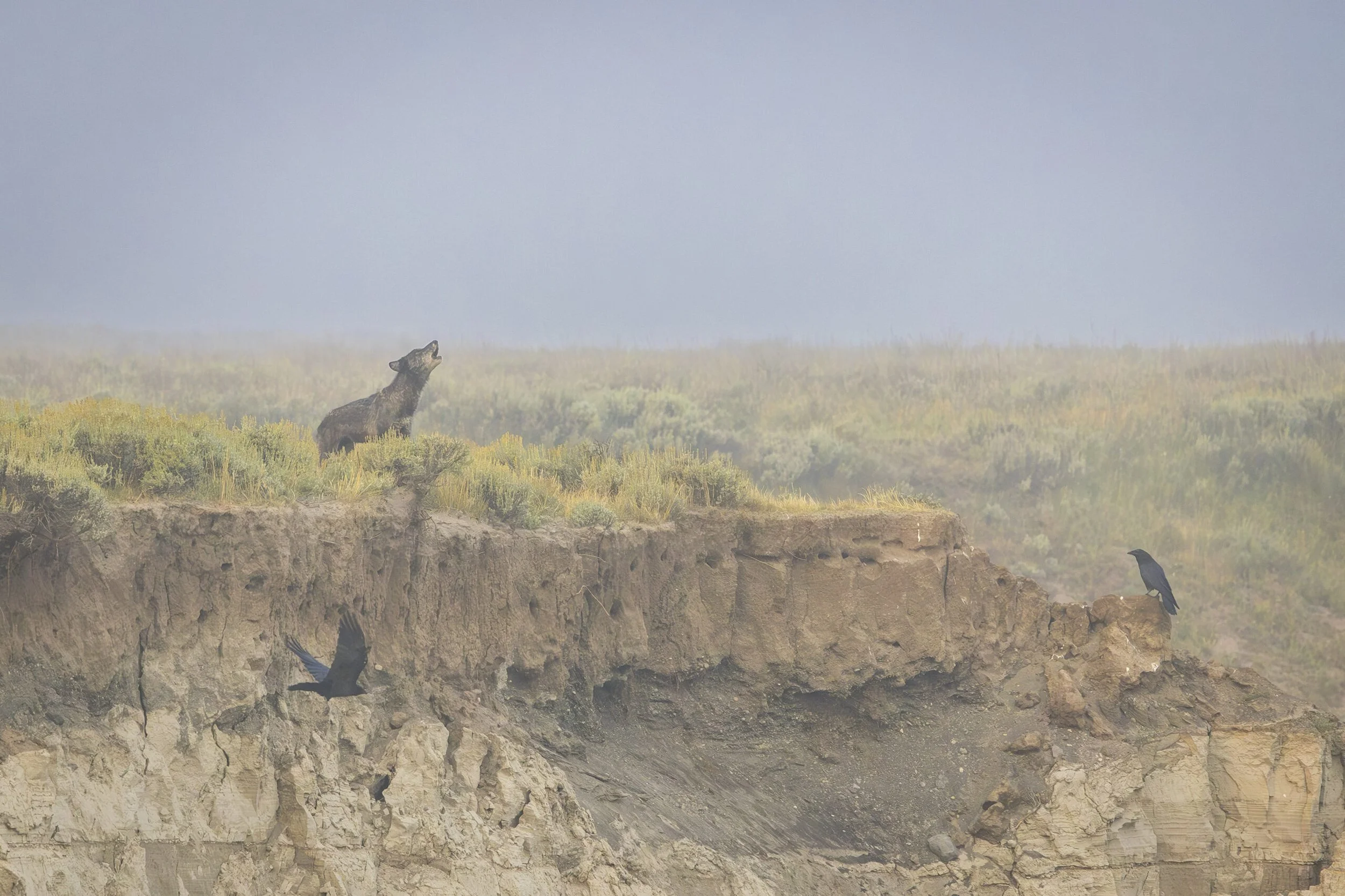
A wolf howls in wild Idaho. Ed Cannady photo.
Wildlife
Wildlife policy continues to be one of the busiest and most closely watched areas at the Statehouse.
After the hearing on House Bill 678, where we testified and requested that the bill be sent to the amending order to close a loophole, the bill initially advanced to the Senate floor. In a notable turn, the Senate then granted unanimous consent to send the bill to the amending order. While we hoped that decision reflected consideration of the concerns raised during testimony, the amendment ultimately adopted did not resolve the issue and may, in practice, intensify the problem.
At the same time, the IDFG’s Hunting and Advanced Technology (HAT) Working Group has continued its effort to adopt rules that would limit the use of certain advanced technologies, such as thermal scopes and drones, during big game hunting for a short period each year. Those rules advanced out of committee on the Senate side last week after a lively and closely divided hearing, but they remain on hold in the House. House committee members are currently waiting to see whether legislation can be introduced to address concerns related to the use of these technologies for wolves and other contentious species, rather than limiting their use.
House Bill 630, which addresses aerial wolf killing on private land, also advanced last week, passing out of the Senate committee and now heading to the Senate floor. Despite ongoing efforts behind the scenes to address some of the bill’s key issues, it moved forward without changes. We will continue to monitor the bill closely as it proceeds through the final stages of the legislative process.
Senate Bill 1326, which would significantly limit the authority of Conservation Officers to enforce certain wildlife laws, also advanced last week, passing out of the House committee and likely heading to a vote on the House floor this week. Changes to enforcement authority can have far-reaching implications for wildlife management and compliance, making this a bill we are watching closely as the session nears its conclusion.
Senate Bill 1300, which could jeopardize Idaho’s Harriman State Park, also advanced out of committee and is now headed to the House floor. If approved there, the bill will move to the Governor for consideration. Meanwhile, Senate Concurrent Resolution 124, which focuses on wildlife crossings, narrowly passed committee and is expected to receive a vote on the House floor this week.
Energy
As AI intrudes upon our daily lives, data centers are becoming a preview of the future—and a growing local flashpoint. People value what AI can do, but don’t want massive facilities in their backyards. Lawmakers are trying to strike the balance, and ICL appreciates the effort. It’s a tough tradeoff: data centers bring temporary construction jobs, some permanent jobs, but mostly tax revenue. They also demand huge amounts of water and electricity—and already benefit from generous tax breaks. At a time when Idaho faces a real water crisis, the question is clear: passing trend or permanent footprint? Here’s how lawmakers are responding.
HB 895 addresses the significant water demands of data centers by restricting consumptive water use for cooling in new facilities unless the water is supplied by a city or water district. HB 897 is a proactive effort to address sales tax exemption qualifications related to energy and water consumption of data centers in a number of key ways. It narrows the original sales tax exemption to only internal servers; it adds two additional criteria for exemption qualification; it sets a 20-year expiration of each project exemption; and includes some other reporting requirements. ICL supports both bills.
HB 911 sets clear rules for “new large loads”—power demands of 50 MW or more. This bill protects ratepayers while still allowing major users, like data centers, onto the grid. ICL is neutral because of the importance of ratepayer protections while focusing its advocacy on legislation with direct environmental impacts.
For more ICL perspective on data centers, ICL staffer Josh Johnson wrote a three-part series. Part 1 dives into how much energy data centers use, Part 2 discusses how much water data centers use, and Part 3 looks at potential data center impacts in Idaho.
Public Lands
Senate Joint Memorial 111, a Public Lands memorial, advanced out of the House committee last week and is now headed to the House floor. We anticipate a vote as soon as this week, which will mark the next key step for the memorial.
Meanwhile, Senate Joint Resolution 103, one of two Constitutional Amendments addressing public lands, did not receive a vote on the Senate floor and was instead sent back to committee. In practical terms, that typically signals the resolution did not have sufficient support to move forward at this time. While this development is encouraging, it does not necessarily mean the issue is resolved. We will continue to monitor the resolution closely as the session enters its final stretch.
House Bill 910 also advanced last week, narrowly passing out of committee and heading to the House floor for a likely vote in the coming days. Efforts related to Idaho’s endowment lands are often contentious, and the hearing for this bill reflected that reality. HB 910 would create a new framework for developing fee-based “managed recreation opportunities” on state endowment lands through a partnership between the Idaho Department of Lands and Idaho Parks and Recreation.
Pesticides
While we are relieved that no pesticide legislation was introduced in Idaho this session, there is currently ongoing concern at the federal level as we expect H.R. 7567—the Farm, Food and National Security Act of 2026—to receive a vote this week or next in the U.S. House of Representatives. It is expected to significantly impact Idaho’s agricultural sector by providing pesticide immunity to manufacturers, which could restrict legal recourse for farmers and residents harmed by chemicals. It seeks to modernize federal farm policy, with likely impacts on conservation programs, agricultural research, and pesticide rules. Send a clear message to Idaho’s Congressional delegation today that you do not support pesticide immunity legislation.
Get a full debrief of what’s going on with pesticide immunity bills in our blog.
Alex’s Analysis
The pacing of this session has been bizarre. It started out slow and uneasy, then accelerated quickly and settled into a relatively steady rhythm week by week. Now, as we enter the final stretch, the pace has shifted once again, and dramatically.
Coming into my first legislative session, I heard repeated warnings about the “sprint finish.” Lawmakers, advocates, and staff all described the final weeks as a period when bills move quickly and decisions happen in rapid succession. It was a pattern I had heard about, but did not fully understand until now.
Whether this rush is a deliberate strategy to move contentious legislation with minimal pushback, when everyone is tired and ready to go home, or simply another example of procrastination’s familiar role in human behavior, the result is the same: the end of the session is a sprint. And when timelines compress, opportunities for careful review, public input, and thoughtful debate can shrink just as quickly. That makes transparency and sustained attention especially important in these final days, when decisions are moving fast and the consequences can last long after the session ends.
Listen of the Week
SB 1300 would require Senate consent and gubernatorial appointment for the directors of Idaho Transportation Department, Parks and Recreation, and Fish and Game agencies. ICL opposes this bill because in 1938, 76% of Idaho voters approved the establishment of professional wildlife management through IDFG in response to the harms caused by political influence over fish and game decisions. Since then, the agency has been guided by a seven-member commission with representation from each region of the state.
This week’s listen is an interview with Tom Dixon, grandson of Roland Harriman and great nephew of Averell Harriman, as he describes the beauty and wildness of the Harriman State Park and why his relatives chose to gift these 11,000 acres to the people of Idaho. It was an extraordinary gift that deserves to be cherished and protected. Not politicized.
In this six minute interview, “A Lasting Legacy, Exploring the History of Harriman State Park,” Tom Dixon shares what makes the first state park of Idaho so special.
