
Wetlands are invaluable natural resources. The lakes and rivers that define North Idaho depend on intact wetland systems to filter water, store snowmelt, and release clean, cold flows back into aquifers and surface waters.
That’s why a proposed subdivision in the Coolin–Chase Lake Wetland Complex at the south end of Priest Lake is so concerning. A developer seeks to build on up to 35 lots across 60 acres of this high-value, irreplaceable wetland.
A rare peat bog at risk
The Coolin wetlands include a Class 1 peat bog and fen system—one of only a handful of wetlands in North Idaho still in near-pristine condition. These peatlands act like natural sponges: storing spring runoff, filtering pollutants, and slowly releasing clean groundwater through the summer. They also store enormous amounts of carbon, support rare species, and help maintain the clear, cold water that defines Priest Lake.
Because peat bogs form over thousands of years, they are extremely sensitive to disturbance. Even small changes to drainage or soil can cause permanent damage.
Recent monitoring documented unpermitted excavation on at least three parcels. Heavy equipment has trenched out a channel connected to Priest Lake, leaving dredged material piled next to the water. Culvert-like pipes piled on the property near the dredged channel suggest possible plans to drain the wetland. Such activity can send sediment into waterways, degrading water quality and harming fish and wildlife—while potentially altering the fragile peatland forever.
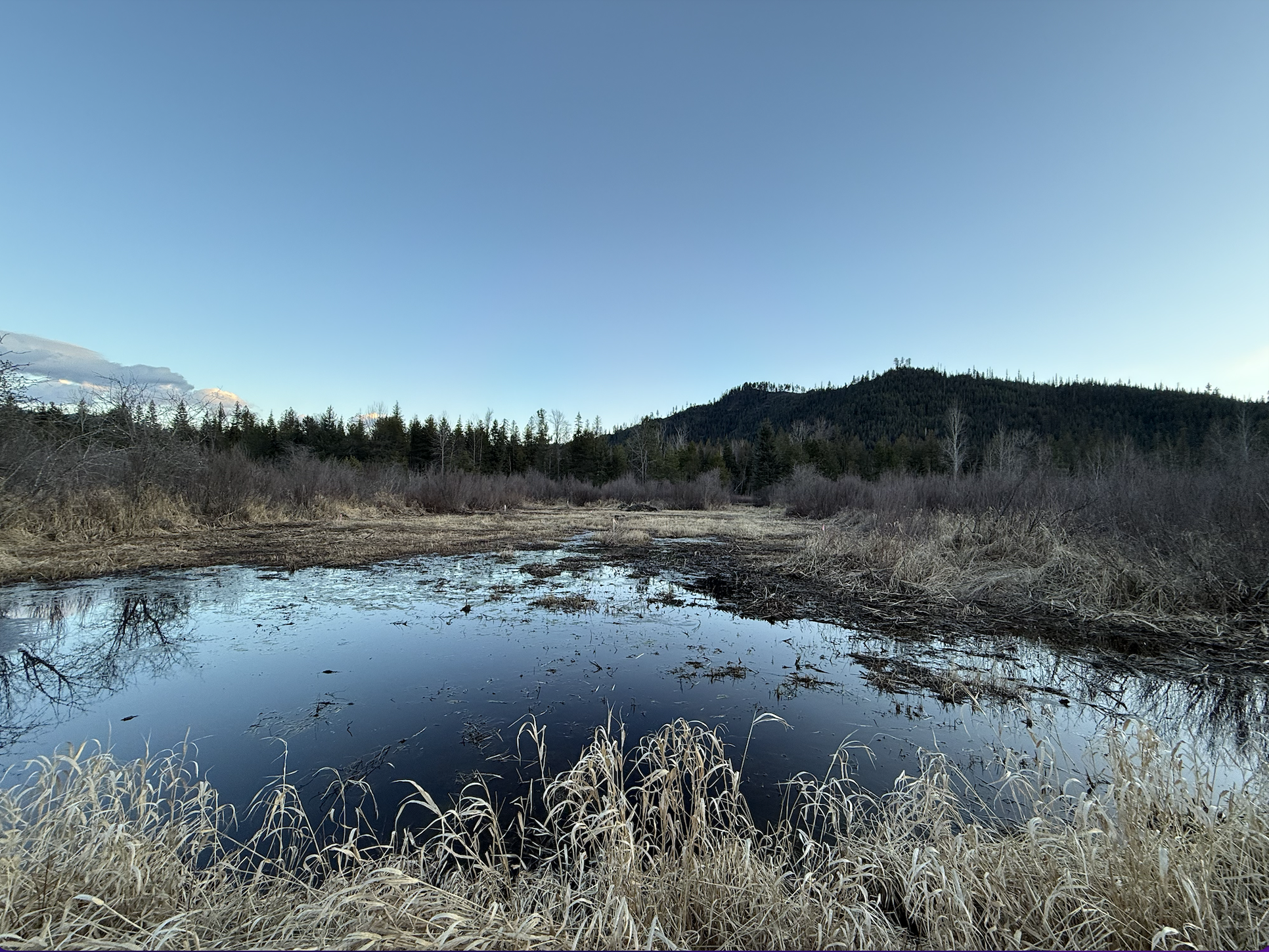
The lot with the recently expired permit to fill.
In addition, a 2022 dredge-and-fill permit issued for a different parcel has expired. That permit—intended for projects with minimal impacts—allowed gravel and rock to be placed in wetlands for driveway and shop pad. But this project is part of a much larger subdivision plan. When impacts are evaluated lot by lot, we risk masking the cumulative damage of developing 35 parcels within a wetland complex. If each parcel were filed separately, the total impact would be devastating and could exceed what is allowed without individual permits and a full environmental review. The work has not been completed, and the Idaho Conservation League has asked the U.S. Army Corps of Engineers (Corps) to not extend this authorization, as it was flawed to begin with.
There is also broader concern. The developer has asked the U.S. Army Corps of Engineers to remove this area from federal Clean Water Act protections. This request relies on a single report commissioned by the developer during the driest time of year, which identified just 5.57 acres of wetlands within the entire 60-acre site. This finding conflicts with multiple other scientific assessments identifying this area as a far larger, highly valuable and sensitive Class 1 wetland system.
If this ill-founded request was successful, the consequences would be dire: the entire area could be destroyed, large-scale impacts could proceed with little oversight, and construction would run rampant—putting Priest Lake, a crown jewel of North Idaho, at risk.
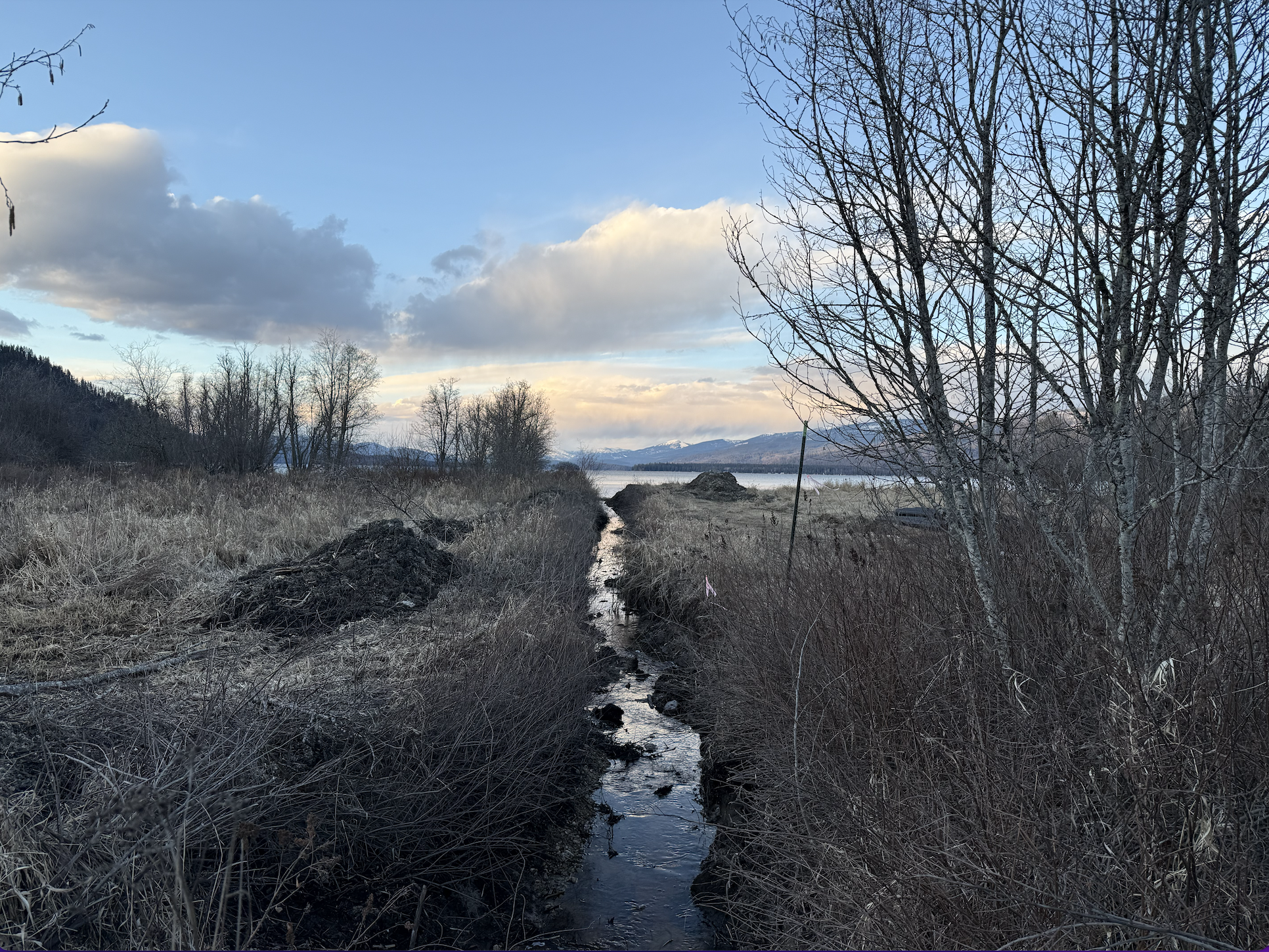
The unpermitted trenching or excavation of the waterway that could drain the wetland. Priest Lake sits in the background.
Why this matters
Wetlands like those at Coolin are not just habitat; they are essential to the region’s groundwater system. When wetlands are filled, ditched, or drained:
Less water is stored for dry summer months
More sediment and pollution reach nearby lakes
Flooding risks increase during spring runoff
Streamflows decline and water temperatures rise, potentially harming fish
Because the Coolin wetlands are directly connected to Priest Lake through creeks and groundwater, damage here can quickly affect the lake itself.
A critical decision for the Corps
The expiration of the current permit gives the Army Corps of Engineers an opportunity to consider the full scope of this proposal. When multiple parcels are part of a single development, the law requires cumulative impacts to be evaluated together, not piece by piece.
Given the rarity of Class 1 wetlands in North Idaho and their direct connection to Priest Lake, this situation calls for a comprehensive environmental review and continued oversight. Healthy waterways are not an accident. They depend on intact natural systems and careful decisions about where and how we build.
The Coolin wetlands are a rare and irreplaceable part of North Idaho’s landscape. Allowing them to be filled, excavated, or removed from protection would put Priest Lake—and the region’s economic and ecological health—at risk.
We still have a chance to get this right—but it depends on the U.S. Army Corps of Engineers doing the right thing and taking a careful, comprehensive approach to protect the wetlands that protect our water.