
The Norm: Hot water and low fish returns
Idaho’s salmon are once again in hot water.
But we are not heading toward a crisis. We are in one.
This is yet another sad fish blog. It is a blog about the things we have already known for years—the facts fish biologists have shared for decades and the knowledge Tribes have carried since time immemorial. Fish returns are dangerously low. The rivers those fish must travel to reach Idaho are getting hotter, lower, and more deadly.
You’ll read this blog, and you’ll read about wildfires, drought, low river flows, and attacks on protections we once took for granted, like the Endangered Species Act. And next year, we’ll likely write another one. The fish returns may be worse. Maybe we’ll get lucky and they’ll tick slightly upward.
And then some will call that “progress.” But make no mistake: this “new norm” is anything but normal, and it is not a reality we can or should accept.
Idaho’s salmon need cold, clean water to survive. Water temperatures above 68 degrees Fahrenheit jeopardize their survival. Yet year after year, as temperatures rise, we have become increasingly accustomed to the conditions that are killing these fish. The hot water trapped behind the four lower Snake River dams is becoming normalized, just like the wildfires, drought, and shrinking rivers.
And we seem paralyzed by it.
We repeat the same emergency measures each summer. We truck fish around the dams. We barge them through the locks, transporting them atop the hot reservoir water. We produce more fish in hatcheries. We spill more water over the four lower Snake River dams and release cold water from Dworshak Reservoir.
Don’t get me wrong, these measures are desperately needed and help fish survive year to year. But they are not recovering the populations. They are simply life support.
Despite decades of emergency interventions, and trying everything except dam removal, Idaho’s salmon and steelhead remain dangerously close to extinction.
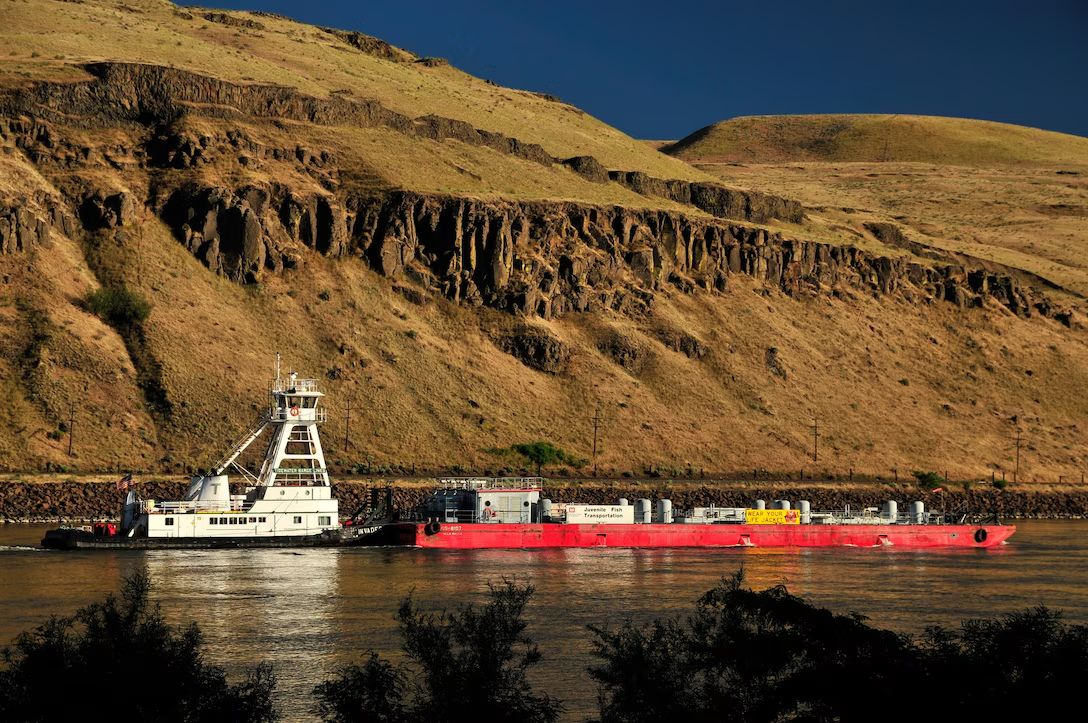
Young salmon are transported by barge. (US Army Corps of Engineers https://www.nww.usace.army.mil/Media/Images/igphoto/2003236957/)
Relying on hope
At some point, writing another blog about hot water and low fish returns stops feeling like an emergency response. What used to be an extraordinary event now appears in annual reports and communications plans. We write about it every summer.
This year is no different. The warning signs are already here. On August 2nd, Ice Harbor Dam's reservoir recorded a high of 71.73°F and has been over 68°F for 32 days (SOS Hot Water Report). In July, a committee of fisheries biologists and managers responsible for estimating salmon and steelhead returns to the Columbia River Basin reduced the forecast for Columbia River sockeye by a staggering 71 percent.
According to the Fish Passage Center, steelhead are also continuing to migrate through the Columbia and Snake rivers in historically low numbers. At Bonneville Dam, approximately 843 steelhead per day had passed over in late July —below the 10th percentile for this point in the run since 1990. Historically, median passage at this point in the season has been closer to 3,000 fish per day.
The numbers get even smaller as fish move toward Idaho. At Ice Harbor Dam, the lowest of the four lower Snake River dams, just 175 steelhead had passed as of July 8. Compared with 820 that had passed by that date last year and a 10-year average of 568. At Lower Granite Dam, the uppermost dam, only 73 steelhead had passed, compared with a 10-year average of 177.
And these numbers are not simply a bad year. Fisheries biologists have warned that the basin is losing steelhead abundance not just year by year, but decade by decade. The most recent 10-year average of summer steelhead returns in the basin is roughly one-fifth of the average return during the 2001–2010 period, contributing to the closing of fisheries across the Northwest.
We know what happens when the water gets too hot
Each summer, I find myself bracing in case we see another fish kill. In 2015, water temperatures in the lower Snake and Columbia rivers reached 72–73°Ffor two weeks.An estimated 250,000 salmon died. That year, not a single Snake River sockeye that crossed Bonneville Dam after mid-July survived the journey to Idaho, and only 2 percent of Okanagan sockeye counted at Bonneville made it home. The tragedy of 2015 was made even clearer by what could have been: had water temperatures remained normal, the sockeye return would have been the largest in more than 50 years.
We know what happens when rivers get this hot. We know what happens when fish are forced to migrate through eight warm, stagnant reservoirs. We know what happens when drought, low flows, and extreme heat collide with a system already pushed to the brink.
And yet we continue to rely on hope. Hope that temperatures will cool down just enough. Hope that the next forecast will improve. Hope that enough fish will survive to return another year. Hope that another emergency measure will somehow be enough to stave off the looming extinction.
But hope is not a salmon recovery strategy.
Perhaps what I fear even more than another devastating fish kill is the slow, continued decline of Idaho’s salmon over the next decade.
I fear we will continue to write about hot water and low fish numbers year after year while elected officials refuse to take bold, meaningful actions. I fear that crisis will become our baseline—that 70-degree water will no longer shock us, that a few hundred fish at a dam will feel normal, and that another devastating year will simply become another data point in another annual report.
We should not have to keep writing the same blog.
We should not have to keep asking Judges for emergency measures to mitigate a system that is fundamentally broken.
Idaho’s salmon do not need another year of hoping for the best.