
After Decades of Investment, Salmon Mitigation is Falling Short
When the lower Snake River dams were built over half a century ago, a promise was made: the loss of salmon would be mitigated. Hatcheries became a central part of that promise, intended to replace fish lost to hydropower. Decades later, and after billions of dollars, a new paper led by Idaho Fish and Game asks: are those mitigation efforts achieving the goals they were created to meet?
For decades, the region has relied on hatcheries as a cornerstone for salmon recovery. Since the Lower Snake River dams were constructed, millions of salmon have been raised in hatcheries and released, with the goal of replacing fish lost to dams.
A recent peer-reviewed study (Ebel et al. 2026) led by Idaho Fish and Game evaluated whether hatchery mitigation programs are consistently achieving the adult return goals that they were established to meet. Rather than recommending a specific policy action, this study and paper measured the effectiveness of the current strategies using hatchery production and survival data, and it quantifies a difficult reality. Despite decades of investment, the current approach is not achieving the goals that it was created to meet. Snake River hatcheries met their salmon return goals in only 21 out of 177 releases—just 12% of the time.
The paper reinforces and quantifies what we have known: hatchery production alone cannot compensate for low survival, and simply producing more fish won’t solve Idaho’s salmon crisis. In fact, the authors of the paper found that hatcheries would have to increase the number of young salmon they release by 300% to 1,200% just to meet today's mitigation goals, underscoring that producing more fish is not the solution.
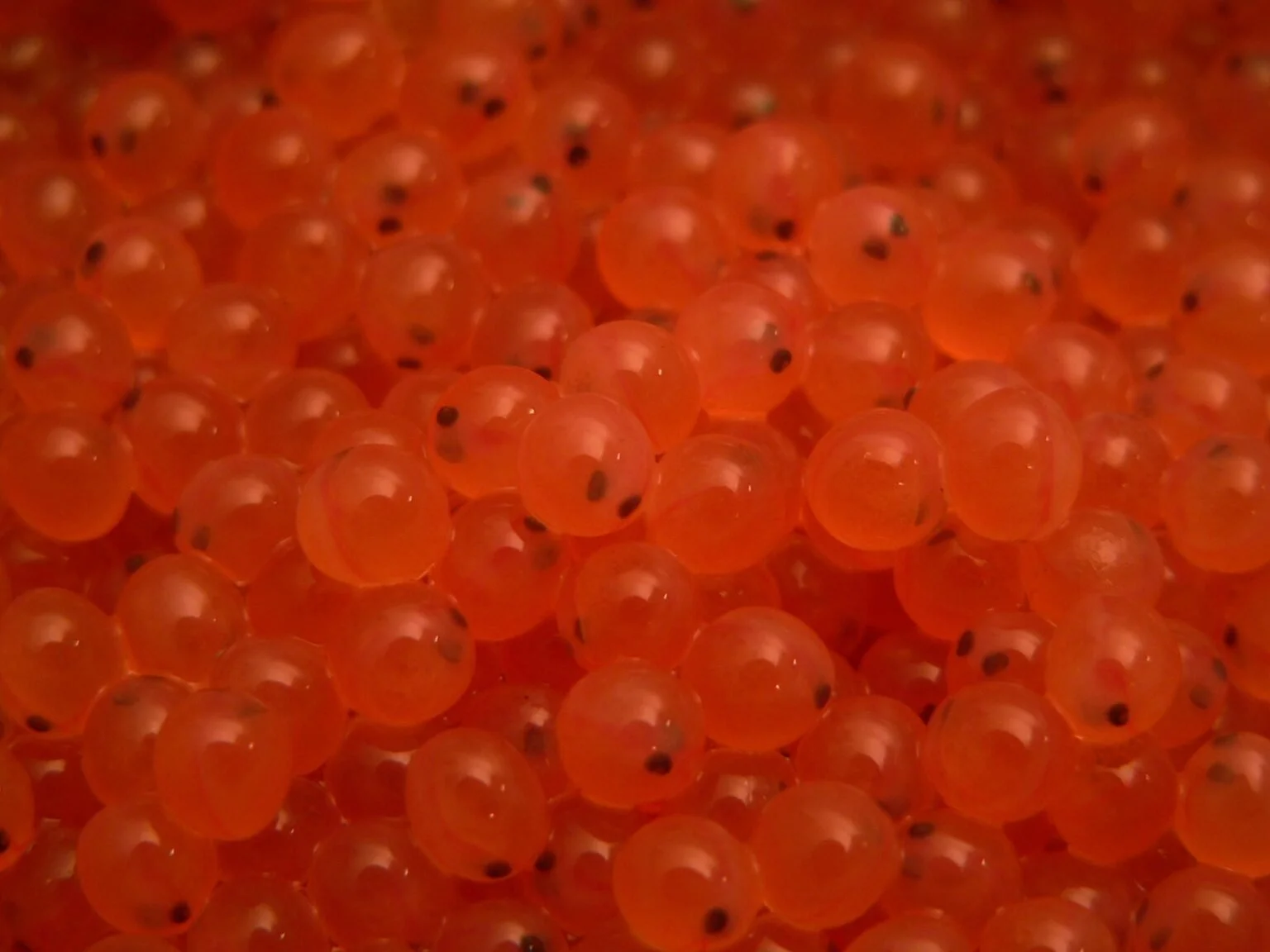
Endangered Redfish Lake sockeye salmon eggs, Burley Creek Hatchery 2009. NOAA Fisheries photo.
The findings of this paper are not a criticism of hatchery programs or the people who have dedicated their careers to recovering salmon. Many of Idaho’s salmon populations only exist today due to the hard work of Tribal and State hatcheries. Instead, the paper quantifies outcomes, and asks whether the current mitigation strategy is delivering on the promises that were made to Idaho’s communities, Tribal Nations, and anglers, and the answer is that, under current conditions, it is not.
Hatcheries continue to play a role in supporting fisheries, conserving populations, providing mitigation, supporting cultural practices, and recreational opportunities. Healthy salmon runs support Tribal treaty rights, Idaho’s fishing traditions, local economies, and the outdoor experiences that generations of Idahoans value. But the paper makes it clear that hatcheries are not a panacea. Long-term success depends on improving salmon survival throughout their migration—from the cold and clean headwaters in Idaho, the Pacific Ocean, and back again.
Science is most valuable when we can learn from it and leverage it to create change. This research provides an opportunity to honestly evaluate what has worked, recognize where the current approach is falling short, and continue to pursue solutions that fulfill the promises that were made when the dams were built.
Historically, 16 salmon and steelhead stocks returned to spawn about Bonneville Dam on the Columbia River. Of these, 4 are extinct, 7 are endangered or threatened, and only 1 is anywhere near its historical abundance. After decades of investment, effort, and commitment, maintaining the status quo and continuing to rely on the same approach won’t change the outcome for salmon. If we are serious about recovering Idaho’s salmon and honoring our commitments to future generations, we must be willing to acknowledge that the current mitigation approach is falling well short, build on what we’ve learned, pursue solutions that improve salmon survival, and finally deliver on the commitments that were made when the dams were built.
