
Headwaters to the Deep Blue Sea: Salmon and Orca
Editor’s Note: This blog is authored by Kathleen Callaghy, Campaign Manager for the Columbia Snake River Campaign.
There is a profound difference, I have found, between knowing something in your head and understanding it. The awareness of a fact, a piece of abstract information, bears little resemblance to a more personal understanding of its implications.
Back in the spring of 2022, a fresh faced new conservationist, I wrote a blog post for Defenders of Wildlife entitled Stream to Sea: Undamming the Future of Salmon, Orcas and the Pacific Northwest. It was the first time I conceptualized the journey of Columbia and Snake River salmon populations from their spawning grounds to the ocean and back, their intrinsic relationship to Southern Resident orcas, and the ways in which the dams along the route hindered their journey and survival.
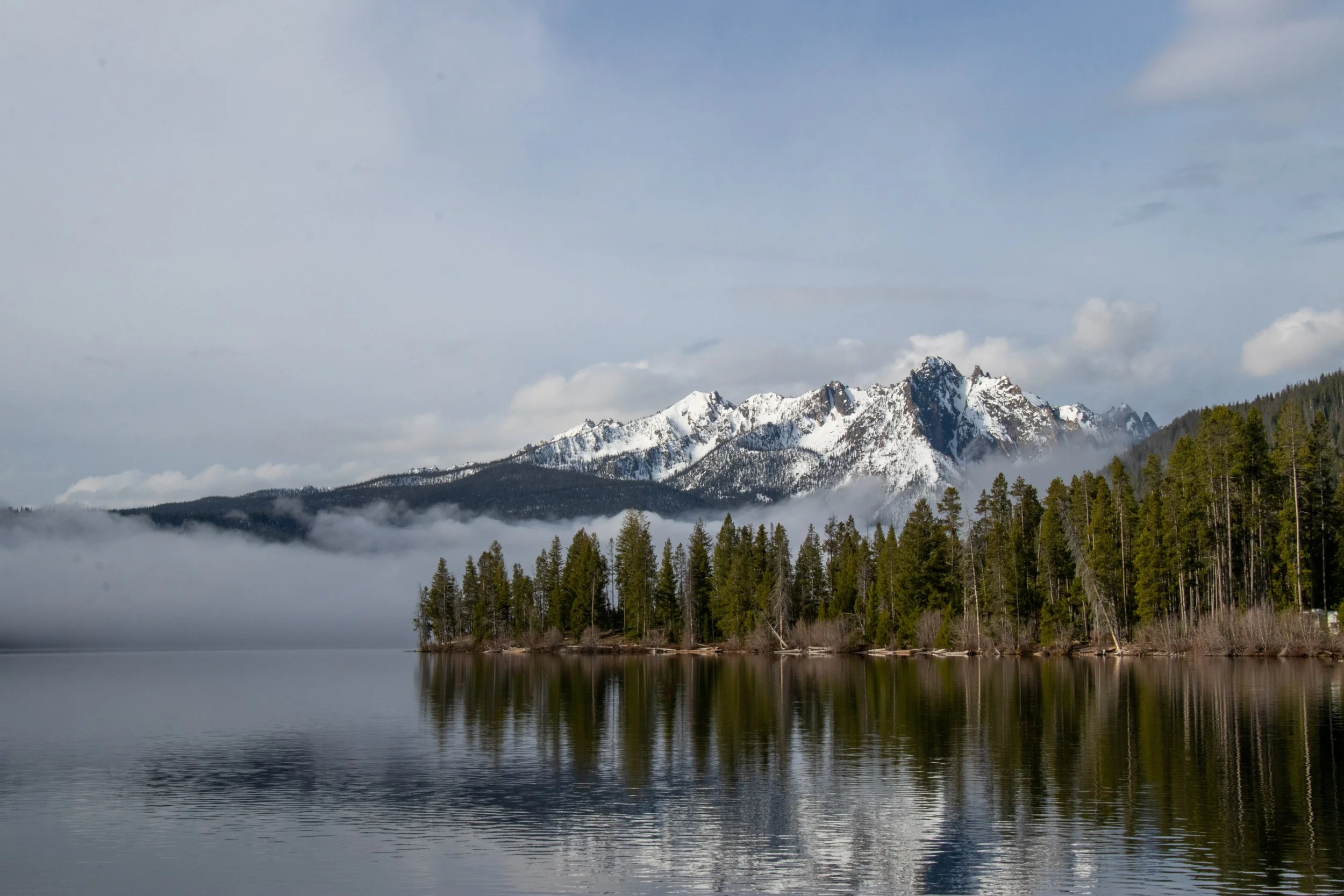
Redfish Lake. Kelly Hewes photo.
However, it wasn’t until I attended my first Wild Idaho! Conference with ICL in Stanley last month that I started to really understand what that journey entails. Not until I drove through the Sawtooth Valley, walked around Redfish Lake, and listened to the stories of people who had paddled from the headwaters of the Salmon and the Klamath Rivers all the way to the ocean did I grasp the outside edge of what it means to swim over 1,000 miles – upriver, navigating massive concrete barriers, hot reservoirs, and shallow stagnant water where predators abound.
The realization struck me with a combination of awe and despair. On the one hand, how incredible that a funny, slippery little creature like a salmon has the strength and the perseverance for such a journey. How humbling it is to know that they do it every year, feeding orcas in the ocean, trees in the headwaters, and humans and wildlife everywhere in between. At the same time, how daunting is our task to ensure this cycle can continue?
Think of it like this: a Southern Resident orca has to eat between 300 and 400 lbs of salmon per day to meet its nutritional needs. Back in the early 1900s, when a single Chinook salmon could reach 100 lbs, that meant catching three or four gigantic salmon in a day, which you could share with your family members. Today, by contrast, the average Chinook salmon is about 12 lbs. The Southern Residents have to work harder and range farther every day to catch the same amount of food, while the numbers and size of that food continue to dwindle.
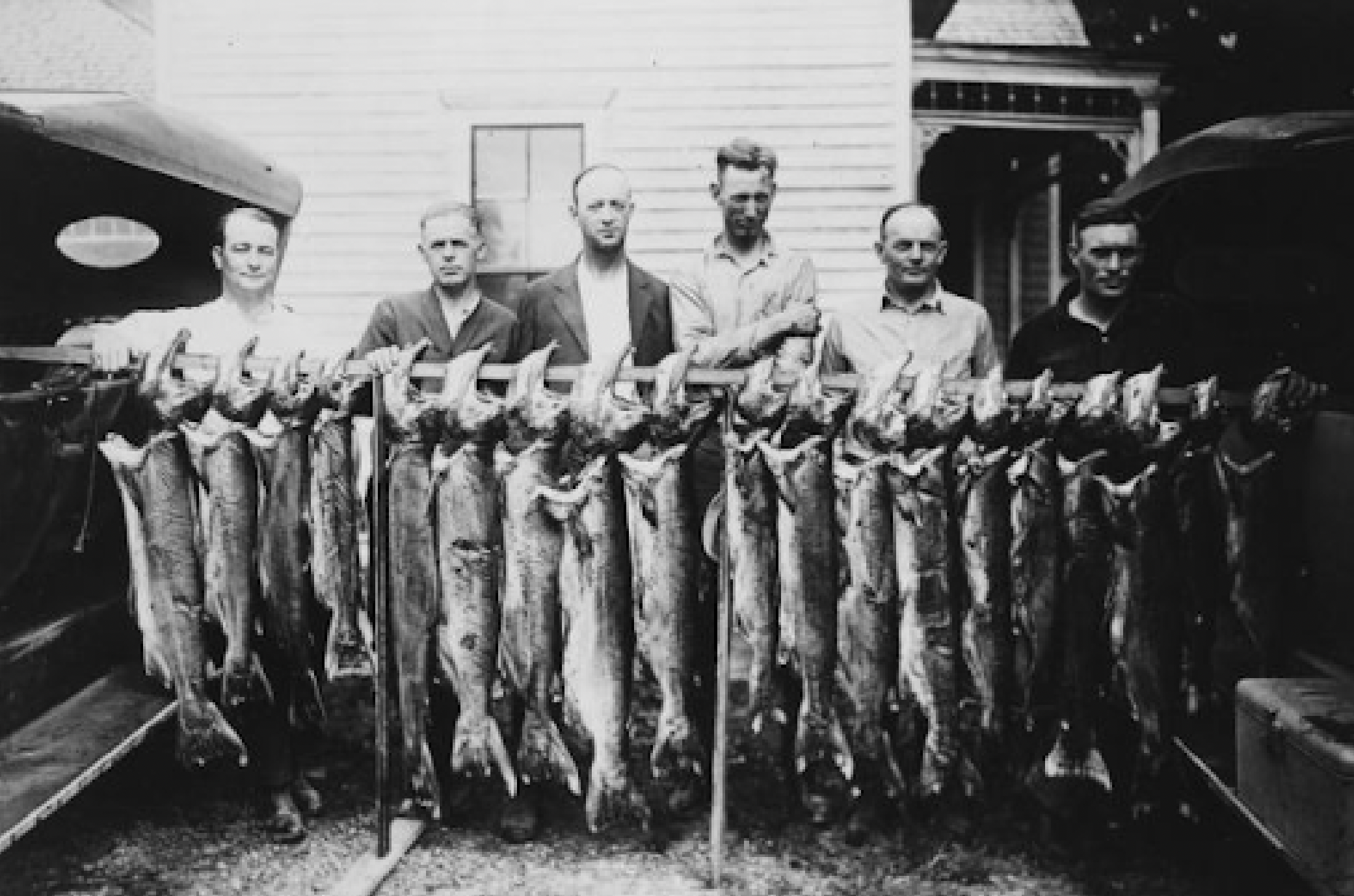
Anglers, fishing guides and outfitters have built family businesses and legacies gathering Chinook. Into the 1960s, Idaho opened long seasons for wild Chinook fishing, and people flocked to the Salmon River for their shot at a “June hog” – the particularly massive wild summer Chinook that ranged into Idaho in early summer each year. Some of these fish measured more than 4 feet long and weighed more than 75 pounds. The June hogs have since disappeared, victims of the species’ decline. Spring and summer Chinook in the Snake River are now less than half that size, on average, and the populations remain close to disappearing.
The weight of this understanding has made it hard not to despair for the future of two species I’ve come to love deeply. Since I wrote that first hopeful article, at least seven more Southern Resident orcas have passed on, including three newborn calves and Tokitae, the last of her kind remaining in captivity. Tahlequah, who broke all of our hearts in 2018 when she carried her dead calf on her nose for 17 days, did it again with another newborn last fall. In the same span of time, the Resilient Columbia Basin Agreement (RCBA) was negotiated, signed, and then cancelled – leaving no clear path to recovery for the imperiled fish populations that bear the lifeblood of the Northwest in their wake. Today we remain, physically at least, no further forward to removing the lower Snake River dams.
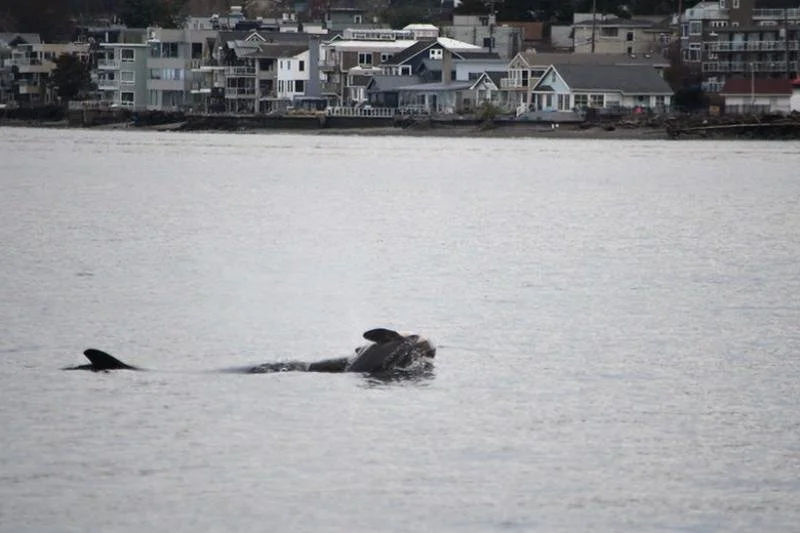
Tahlequah, who made headlines around the world in 2018 for carrying her dead calf for 17 days, carries a second dead newborn calf in late 2024. NOAA photo.
But we cannot leave it there. If salmon can continue to swim over 1000 miles each year; if Tahlequah can carry her calf for the same distance; then the least we humans can do is keep using our voices to protect and sustain them. June is Orca Action Month—you can celebrate by taking action for the salmon that orca rely on.
There are glimmers of hope. The removal of the Klamath dams and the larger-than-expected returns of salmon there will hopefully give the Southern Residents a little more time to hold on. Meanwhile, Washington state is working to complete the lower Snake River dam service replacement studies that were meant to be completed under the RCBA. And while I may fear for the future of Idaho’s salmon, I have every confidence that ICL’s members have what it takes to persevere.
Thank you for the lesson.
“On the day you left me, you promised you’d come back
I don’t know who taught you how to live like that.
All the fences in your way have to crumple in the wind one day.
How dare you love me, like you’ve never known fear,
When you’ve got more troubles than minutes in the year?
And a voice like your father’s tells you nothing good’s for free
Well, that may be, but you’re walking home to me.”