

Mining in Idaho
Safeguarding Idaho's Environment From Mining Pollution
Idaho has a long and colorful history of mining, but too many past operations have left polluted streams and contaminated landscapes. According to the Environmental Protection Agency, 40% of watersheds in the West are impacted by mining activity.
The Idaho Conservation League works to ensure that mining does not threaten human health, special places, or Idaho’s clean water. We evaluate each mining project carefully, considering factors such as: 1) what is being mined (e.g., cobalt vs. gold), 2) how it’s being mined (open-pit vs. underground), and 3) where it’s being mined (who or what is downstream).
ICL engages mining companies directly to minimize environmental impacts wherever projects are approved and built. We also push companies to invest in programs that clean up historic mining waste and restore damaged landscapes—critical steps given the industry’s track record of leaving pollution behind. By scrutinizing proposed mines, improving those that can meet strong environmental standards, and opposing those with major ecological impacts, we protect Idaho’s most special and sensitive places for current and future generations.

ICL: Idaho’s Mining Watchdog
We all use metals every day. We also need clean air, clean water, and a safe environment for our families away from toxic waste. Mining is still managed under the Mining Law of 1872, which prioritizes mining over all other uses. ICL and other advocacy organizations across the country are working to update this law to ensure that mining is managed responsibly and that local communities and Native American Tribes have a greater say in whether a mine project proceeds or not.
Mining companies big and small are scouring Idaho’s vast public lands for more ore to extract. It’s a good bet that an exploration drilling project or even a new mine is being proposed upstream of your drinking water, favorite fishing stream, or place special to you and your family.
Here are some of the mining projects that ICL is currently working on to ensure that clean water around the state is protected from mining contamination.

THE STIBNITE GOLD PROJECT
Safeguarding Idaho’s Streams, Wilderness, Fish and Wildlife
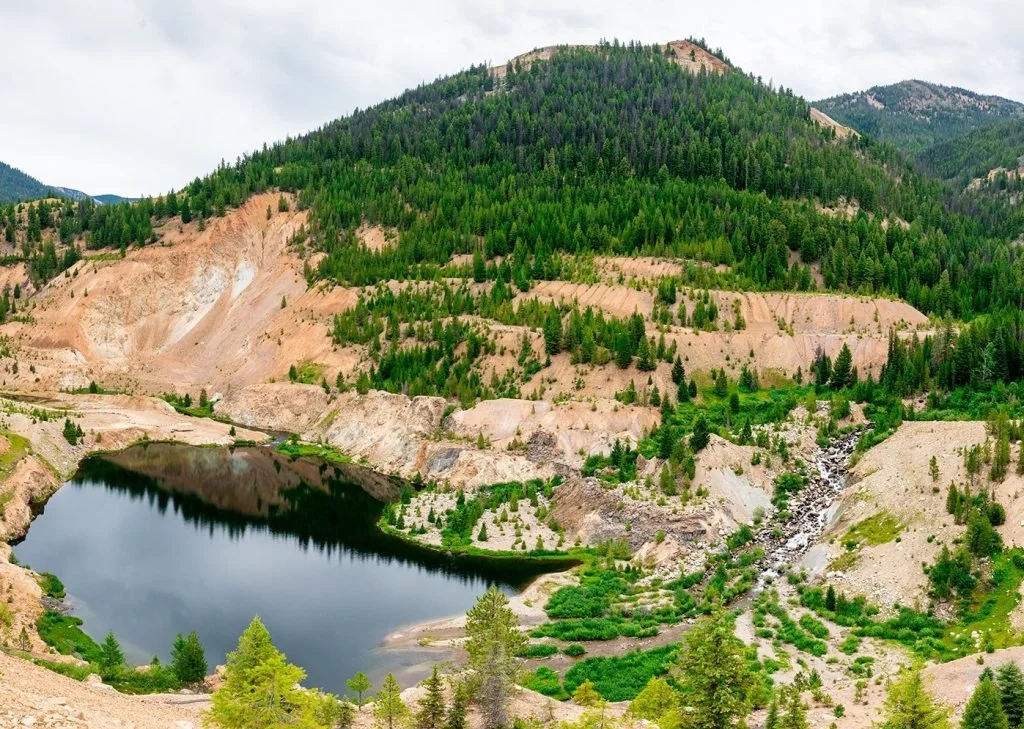

Perpetua Resources’ Stibnite Gold Project
The East Fork South Fork of the Salmon River is many things—a rambunctious whitewater river, one of Idaho’s most ecologically important watersheds, a stronghold for bull trout, steelhead, and Chinook salmon—and the target for an open-pit cyanide vat leach mine. Mining company Perpetua Resources hopes to dewater the river, divert it into a tunnel, excavate a 720’ deep pit under the riverbed, and then backfill the pit with mining waste from another open pit. Meanwhile, a pristine tributary to the East Fork South Fork would be buried under 280 million tons of toxic mine tailings and blocked by a 475’ high dam.
While Perpetua’s stated intent is to clean up and restore a historic mining area that was contaminated and abandoned by previous mining companies, the footprint of the proposed Stibnite Gold Project goes far beyond the footprint of previous mining operations and will have unacceptable impacts both onsite and far downstream. Perpetua is also promoting the narrative that the mine will provide antimony for industrial-sized batteries that will fuel the transition to sustainable energy, but at the end of the day, Stibnite remains a gold mine in a high-risk location. The mine is in the advanced stage of permitting and we are part of a concerted effort to stop this high-risk project.
The Stibnite Gold Project & Burntlog Route
Perpetua Resources’ preferred road for the mine, the so called Burntlog Route, would punch a 40-mile long high-elevation industrial haul route through Inventoried Roadless Areas on the western flank of the Frank Church-River of No Return Wilderness. Its route would cut through important denning habitat for wolverine and cross streams that provide habitat for endangered bull trout, Chinook salmon, and steelhead. Given that hundreds of truckloads carrying hazardous chemicals and waste would be transported via this route, it spells big trouble for Idaho’s backcountry—and all who rely on and love it.
In fall of 2025, ICL staff headed into the South Fork Salmon River watershed country to explore some of the special places at grim risk of the Stibnite Gold Project and the Burntlog Route. From watching dozens of spawning Chinook salmon to weathering an overnight thunderstorm, their experience was just like the landscape—rugged, wild, and worth fighting for.
Click the button below to visit our Save the South Fork Salmon page and to take A Journey Through Burntlog.
THE CUMO PROJECT
Protecting the Boise River
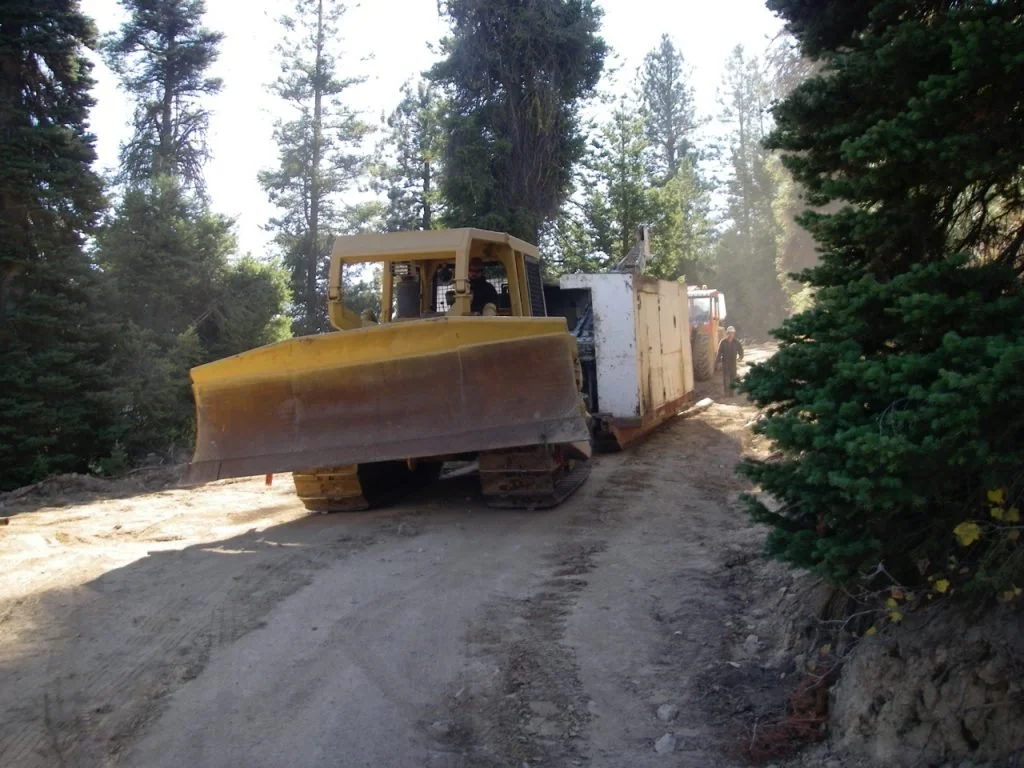

CuMo Mine
The Boise River defines the character of Idaho’s capital and provides much of the city’s drinking water. But the proposed CuMo Mine threatens to contaminate our river with arsenic, heavy metals, and industrial chemicals.
A Canadian mining company named the Multi-Metal Development (formerly American CuMo Mining Corporation) wants to develop “the world’s largest open-pit accessible” molybdenum mine in the Boise River headwaters near Idaho City. If fully constructed, the CuMo Mine (short for copper and molybdenum) would threaten the Boise River watershed with billions of tons of potentially toxic mine waste.
The Canadian mining company had previously proposed a mine exploration project that would construct over 10 miles of new roads and clear 137 drill pads in the Boise River headwaters near Grimes Creek. Both exploration and mine development for the CuMo project are extremely controversial. The exploration site is upstream of half of Idaho’s population, and the Boise River is the most recreated river in Idaho. According to the EPA, mining is the number one toxic polluter in the U.S. ICL and our partners successfully stopped two previous exploration proposals because the federal government had overlooked environmental concerns, but the Forest Service is currently analyzing a new exploration proposal from the mining company.
MINING IN IDAHO’S SILVER VALLEY
A Century of Mining Pollution in the Coeur d’Alene Basin
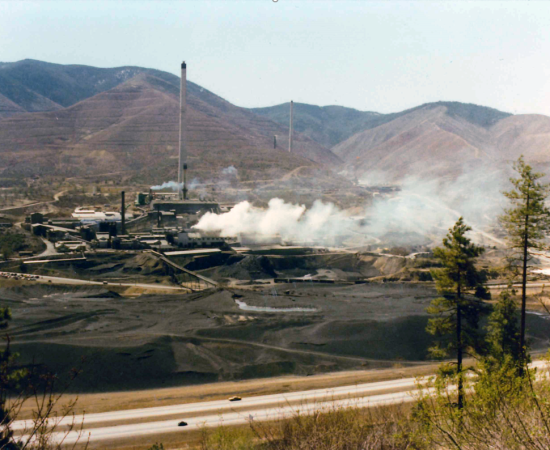
Bunker Hill Smelter Complex. Idaho.gov photo.
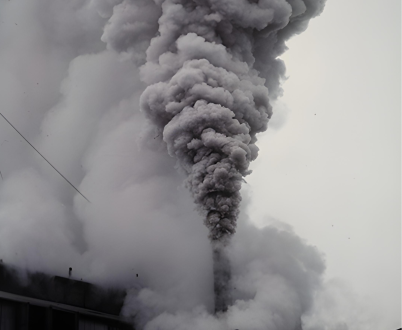
Smoke from the Bunker Hill Baghouse. Idaho.gov photo.
Watchdogging the Mining Industry
Idaho’s Silver Valley was once the largest silver mining district in the world. As is all too common, mining activity discharged countless tons of pollution into the air and water. The contamination was so severe that trees would not grow on the hillsides around Smelterville, and children living in the valley recorded some of the highest blood-lead levels in the nation. The Environmental Protection Agency ultimately listed a vast swath of the Valley and Lake Coeur d’Alene as one of the largest, most complex Superfund sites in the Nation, and cleanup efforts have been underway for decades.
Heavy metals also washed downstream and settled on the bottom of Lake Coeur d’Alene. While those metals currently remain largely contained in the lakebed, the chemistry of the lake is changing due to pollution from poorly regulated development. These shifts could increase the risk that buried contaminants become mobilized and enter the water column.
ICL’s role is to ensure that ongoing mining operations in the Silver Valley—including at the Galena and Lucky Friday mines—comply with the Clean Water Act and do not add to the existing pollution burden. We are also closely monitoring the proposal to reopen the Bunker Hill Mine and are advocating for rigorous oversight, modern pollution controls, and responsible operation to prevent history from repeating itself.
TRANSBOUNDARY COAL MINING POLLUTION
Protecting the Kootenai River

Juvenile Kootenai River White Sturgeon. USFWS photo.
Transboundary Waters, Transboundary Pollution
High in the mountains of the Elk River Valley in southeast British Columbia, mountaintop-removal coal mines are releasing selenium and other pollutants into the watershed. This contamination flows downstream into the Kootenai River, crossing the U.S.–Canada border into Montana and then Idaho. Selenium is a colorless, odorless pollutant—you won’t see it while standing on the banks of the Kootenai River in Bonners Ferry—but concentrations have been steadily rising since the 1980s and are accumulating in fish, including burbot and the endangered Kootenai River white sturgeon, which the Kootenai Tribe of Idaho is working to recover.
ICL partnered with other conservation groups and Tribes to secure and defend enforceable selenium limits in the State of Montana on the U.S. side of the border. These standards are enforceable under the Boundary Waters Treaty between the U.S. and Canada. We are now actively defending these protections against challenges from Glencore, the international mining conglomerate that owns and operates the mines.
At the same time, representatives of the U.S. and Canada are discussing long-term solutions through the International Joint Commission. ICL serves on the Commission’s Public Advisory Group and works closely with the Kootenai Transboundary Coalition to push for accountability and meaningful action. We also oppose new or expanded coal mining—such as the proposed Crown Mountain expansion of the Fording River Mine—in this already overburdened watershed.
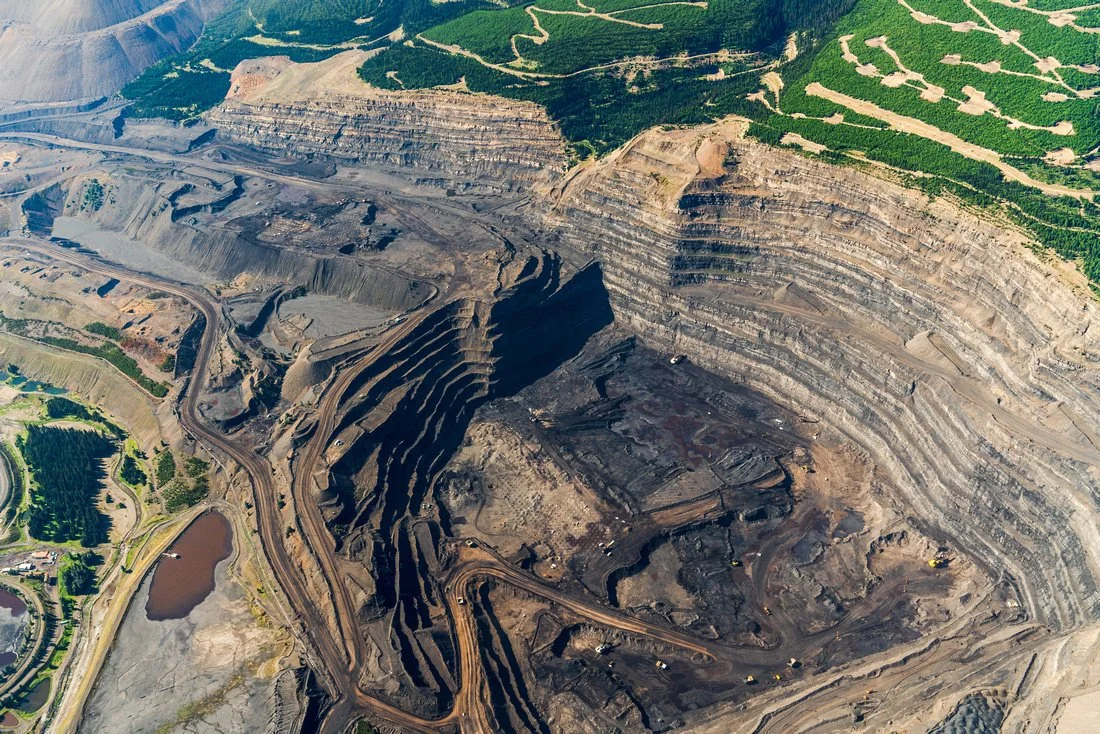
Mountain removal coal mining at the Fording River coal mine in British Columbia’s Elk Valley. EcoFlight photo.
Stay updated on ICL’s mining work by signing up for our Public Lands Campaign email updates.