
Toxic Algae is Showing Up Earlier in Idaho. Here’s Why That Matters
For the past four years, the Idaho Conservation League has tracked toxic algae outbreaks across Idaho, helping people understand the risks these outbreaks pose and advocating for better monitoring and prevention. An alarming trend has emerged: toxic algae is appearing earlier in the year and, in many places, lasting longer.
That trend matters for anyone who enjoys Idaho’s lakes, rivers, and reservoirs. Whether you’re swimming, fishing, paddling, or walking your dog along the shore, toxic algae can turn your favorite recreation spot into a health hazard.
What are toxic algae outbreaks?
Toxic algae outbreaks, also known as harmful algae blooms or HABs, are caused by cyanobacteria that multiply rapidly under the right conditions and release toxins into the water.
Several factors help toxic algae thrive:
Warmer water temperatures
Excess nutrients like phosphorus and nitrogen, commonly from animal manure and agricultural or lawn fertilizer.
Slow-moving or stagnant water
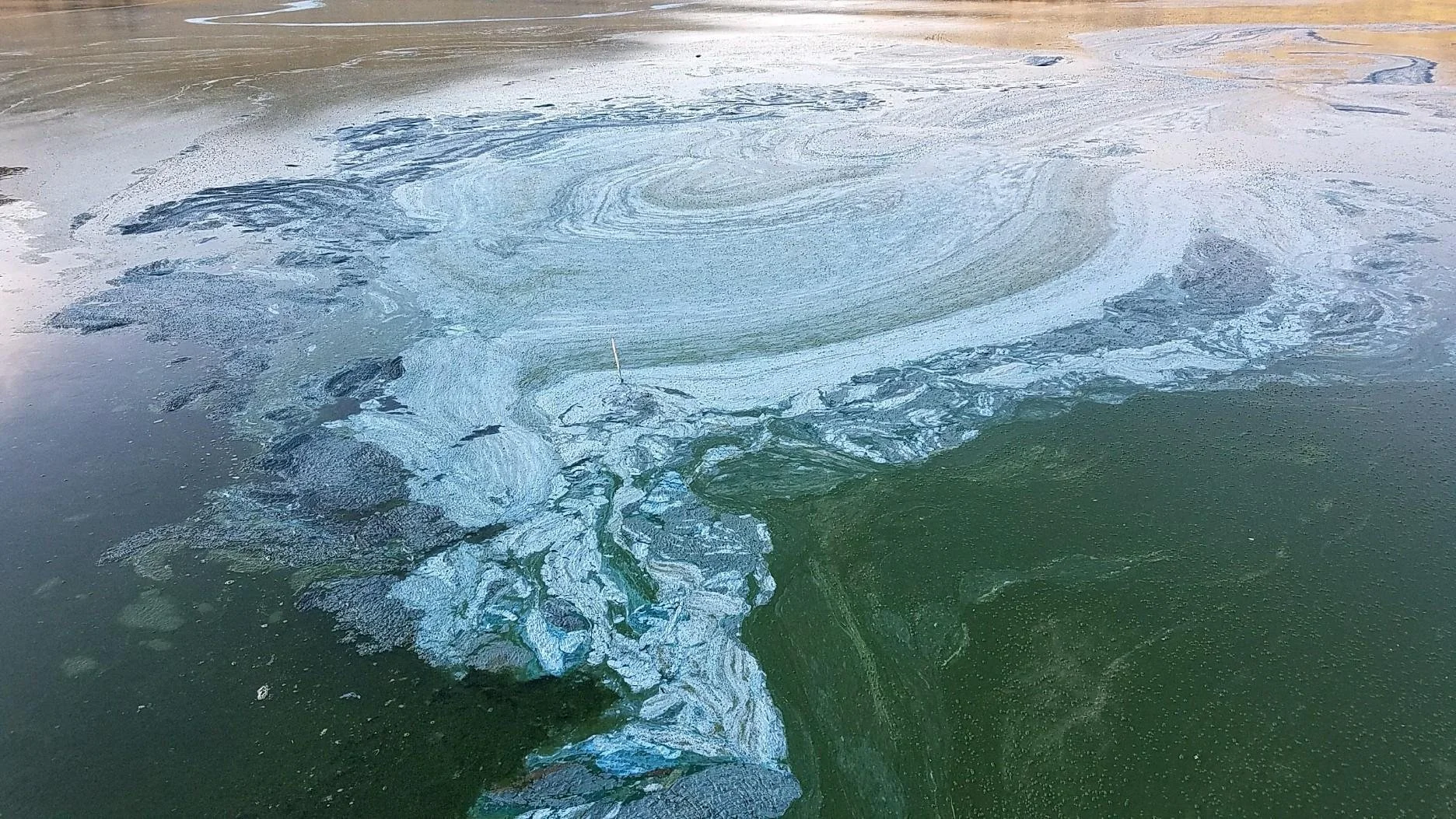
When these conditions come together, cyanobacteria can spread quickly, forming thick mats or surface scum that may resemble spilled paint, foam, or slime. They often produce a strong, foul odor.
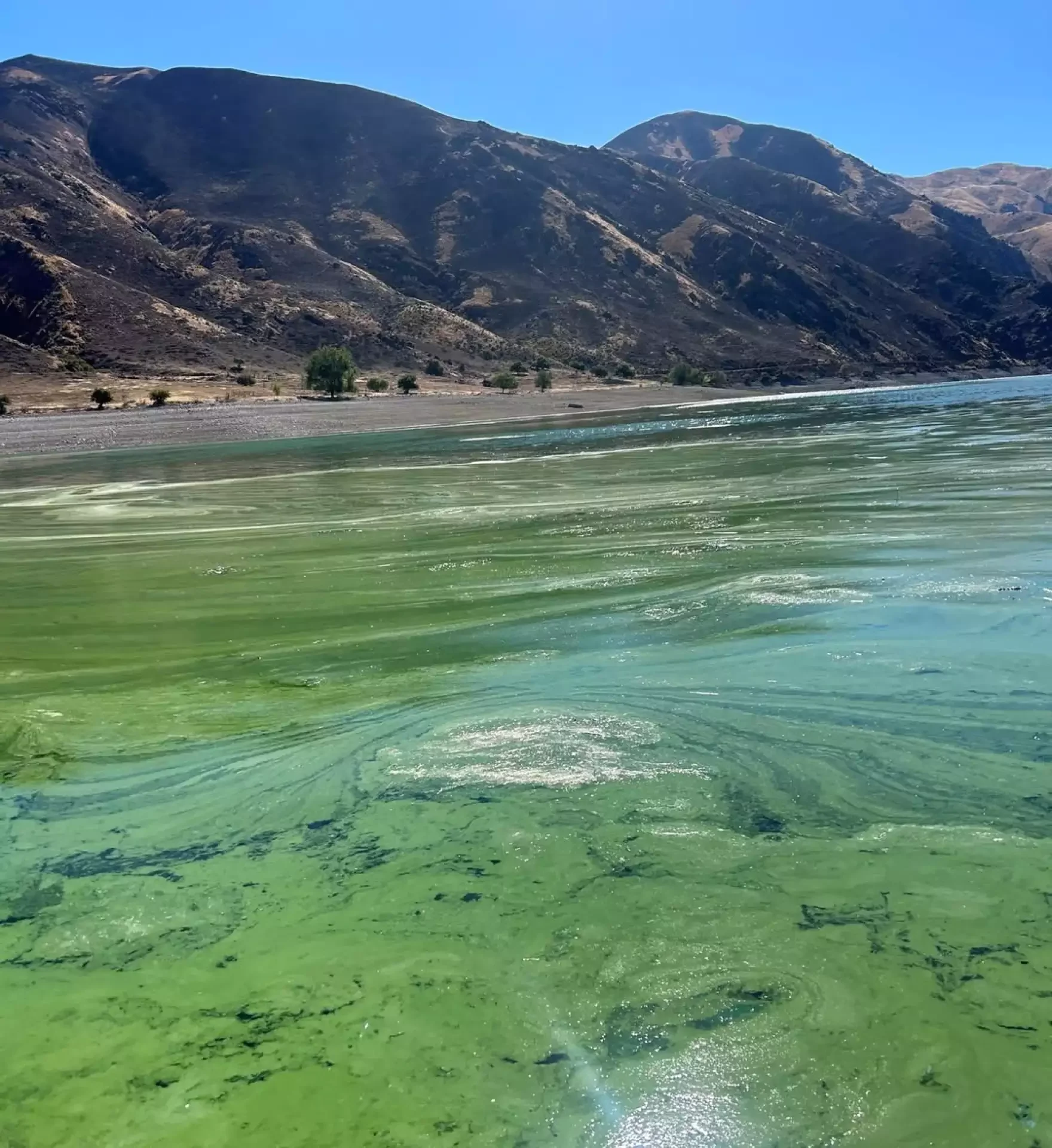
A HAB in the upper Brownlee Reservoir in 2024. IDEQ photo.
Why are they dangerous?
Toxic algae can affect both people and animals.
Contact with contaminated water can cause skin irritation, headache, nausea, vomiting, diarrhea,, and other illnesses. Some cyanotoxins can affect the nervous system, leading to difficulty breathing or other health problems. Children and pets are especially vulnerable because of their smaller body size and greater likelihood of swallowing contaminated water. Dogs are at particularly high risk since they often drink from lakes and rivers, swim through mats, and can later ingest toxins while licking mats from their fur after being in the water. Exposure can become fatal within hours. Livestock and wild animals can also be sickened.
It’s important to know that boiling water or using portable water filters are not effective and in some cases, can actually concentrate the toxins.
Why are toxic algae outbreaks appearing earlier?
This summer, the outbreaks are occurring noticeably sooner than in prior years while also lasting longer. Several long-term trends are creating the conditions for this.
Idaho is getting warmer
According to data from NOAA, the National Centers for Environmental Information, and Climate Central, Idaho’s average summer temperatures have increased by roughly 2 to 3 degrees since the 1980s. That may not sound like much, but even modest warming has significant effects on lakes and rivers.. For example, nighttime lows have increased more quickly than daytime highs, causing a reduction in the number of freezing night time temperatures. Warmer nights reduce the cooling that once helped slow their growth. Winter temperatures are also rising, and more quickly than summer temps, leading to shorter, drier winters with less snowfall and earlier snowmelt.
Snowpack is shrinking
Warmer winters mean more precipitation falls as rain instead of snow. Snow also accumulates later in the season and melts earlier in the spring.
According to the Idaho Department of Water Quality, Idaho experienced a historic snow drought in March 2026, featuring record-low snowpack levels in over 90 years of recording. This year’s snowpack peak occurred three weeks early on March 17, and warmer spring temperatures accelerated melting weeks ahead of schedule. In late March, KTVB reported that the Boise Basin sat at just 56% of its typical peak snow water equivalent.
Less snow means less cold water flowing into rivers and reservoirs during the summer. Lower water levels warm more quickly and often move more slowly—conditions that favor toxic algae outbreaks.
Pollution continues to fuel outbreaks
Warm water alone doesn’t create toxic algae. Cyanobacteria also need nutrients—pimary phosphorus and nitrogen—to grow. Across Idaho, fertilizer runoff from lawns and agricultural fields, along with animal manure, puts these nutrients into rivers, lakes, and reservoirs.
Dairy farms, which produce an enormous amount of manure, are one source of these nutrients. Waste from these farms contains high levels of nitrogen and phosphorus due to protein rich feed which, if not disposed properly, will run into surface and groundwater. Idaho’s dairy industry expanded rapidly beginning in the 1980s, particularly in the Magic Valley near the Snake River. As the industry grew, so did concerns about pollution reaching surface and groundwater.
The Idaho State Legislature responded by passing the Dairy Environmental Control Act of 1999, requiring nutrient management plans and environmental permits for dairy operations. Unfortunately, pollution from agricultural runoff remains one of Idaho’s most significant water quality challenges and continues to contribute to toxic algae outbreaks.
Why we don’t know about every outbreak
Tracking toxic algae outbreaks across Idaho isn’t easy. The state has thousands of lakes, reservoirs, and river access points, but only a small number are routinely sampled. Most outbreaks are discovered only after someone notices suspicious-looking water or reports that a person or pet has gotten sick, meaning there is a lag to get a professional to the site. By the time health officials investigate, the outbreak may have already spread—or disappeared. Wind, weather, and changing water conditions can cause outbreaks to change quickly.
Although there is growing evidence that outbreaks are occurring earlier in some Idaho waters, the state's current monitoring system doesn’t yet provide enough consistent statewide data to conclude that trend across all water bodies.
Idaho needs a more proactive approach
Today, Idaho’s response to HABs is largely reactive. Too often, testing begins only after someone reports a problem—meaning people or pets may have already been exposed.
The Idaho Conservation League believes we can do better.
We support a more proactive approach by creating a dedicated statewide monitoring program that routinely tests water bodies across the state. Early detection would allow health officials to identify developing outbreaks before they become widespread, and to notify the public sooner through advisories or temporary closures.
No one should have to discover a toxic algae outbreak because their dog got sick or their family member was unknowingly exposed. By investing in proactive monitoring, Idaho can better protect public health, provide more reliable information for Idahoans, and help communities respond before outbreaks become dangerous.
