
Idaho has a long history of nuclear energy research and development centered around the federal Idaho National Laboratory (INL) facility just east of Arco and on the edge of the Snake River Plain. For decades, INL has played an important role in nuclear energy research, but it was not always appropriately managed. Improper storage and handling of nuclear waste materials during the 1950s and ‘60s resulted in contamination of air, soil, and groundwater. Today, certain areas of groundwater beneath the INL exceed environmental standards for radioactive contamination because of this prior mishandling. However, the Idaho Department of Environmental Quality (DEQ) closely monitors contamination while a comprehensive cleanup and remediation effort is on-going.
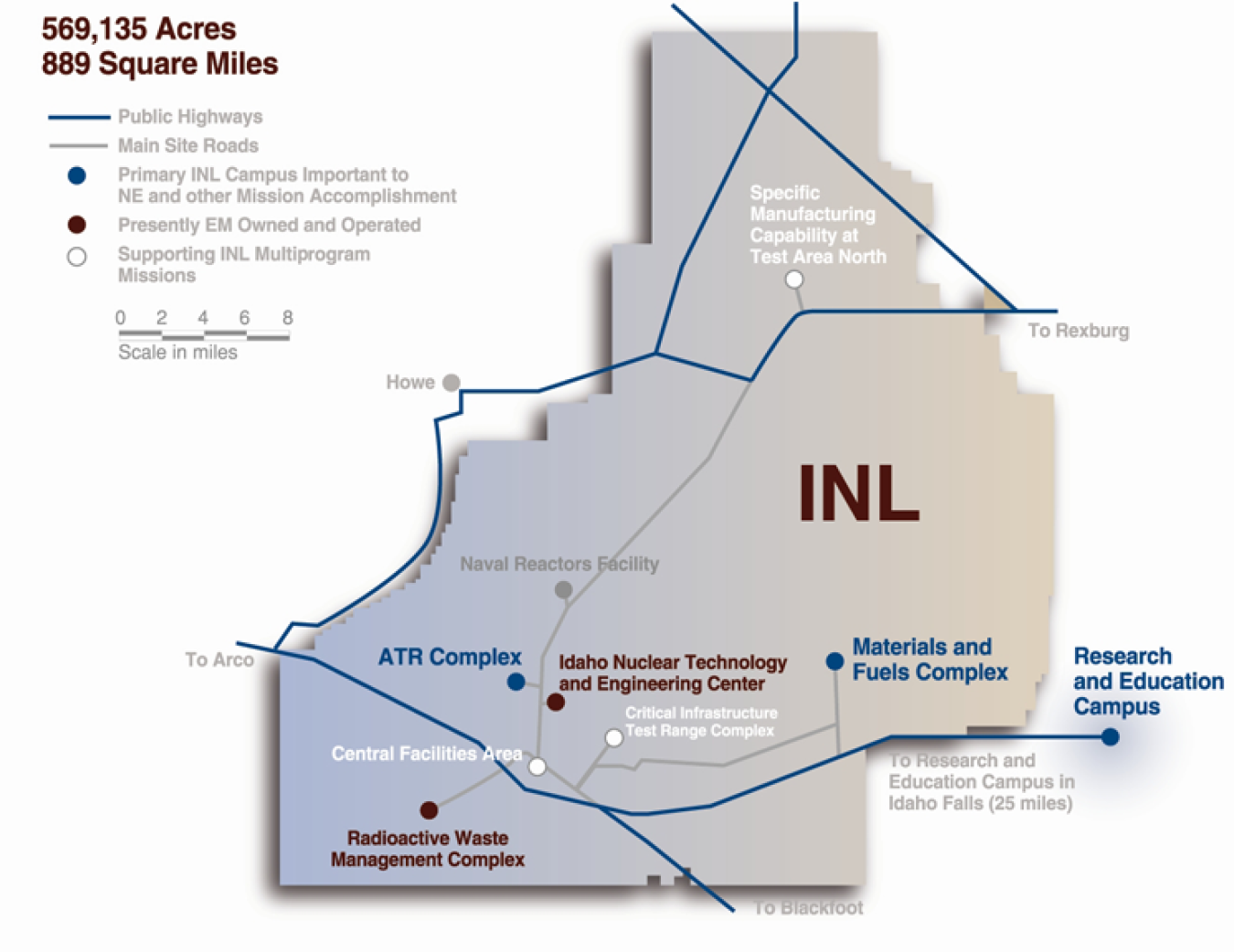
Map of the INL facility Source: Department of Energy
In an effort to ensure cleanup of the existing contamination at INL and to prevent future contamination, former Idaho Governors Phil Batt and Cecil Andrus secured a legal agreement in 1995 to do just that. The 1995 Settlement Agreement (known as the 1995 Settlement Agreement or the Batt Agreement) requires the federal government to complete cleanup of historical contamination at INL by certain milestone dates while also preventing the shipment of any nuclear waste to INL without the state’s consent.
The 1995 Settlement Agreement has been a foundational tool to ensure cleanup at INL while allowing research to continue. However, that could all change in the future.
Recently, Idaho was announced as a finalist to establish a “Nuclear Lifecycle Innovation Campus” (NLIC) under a Trump administration proposal. While the federal government officially proposed NLICs as potentially playing a role in everything from research, to waste storage, to powering data centers, to mining uranium, local reporting has shown that the real purpose of an NLIC is to become a permanent storage site for the country’s nuclear waste. Idaho still awaits final notification on being chosen as a participant.
Simply said, the federal government’s NLIC proposal is spare on details while also failing to recommend specific ways we can safely and responsibly further develop nuclear energy in America. Instead, the Trump administration appears to be taking a shotgun approach based on hypotheticals while really asking states to take on the burden of storing nuclear waste. In exchange, all the NLIC program promises is generalized economic benefit and little if any economic support directly from the federal government.
Establishing a permanent nuclear waste storage facility at INL is not a good idea. INL sits over the Eastern Snake River Plane Aquifer (ESPA), which provides irrigation water for millions of acres of Idaho’s farm land and serves as a source of drinking water for an estimated 300,000 people. Since nuclear waste can remain dangerous for hundreds of thousands of years, permanent storage facilities for nuclear waste typically are located deep underground away from aquifers in areas that are expected to remain geologically stable far into the future. In comparison, INL sits between two active seismic zones, and only 55 miles from the 6.9 magnitude 1983 Borah Peak Earthquake. INL also sits only a dozen miles or so from the Craters of the Moon lava fields. These lava fields last erupted only 2,100 years ago and have erupted every 3,000 years or so during the past 15,000 years.
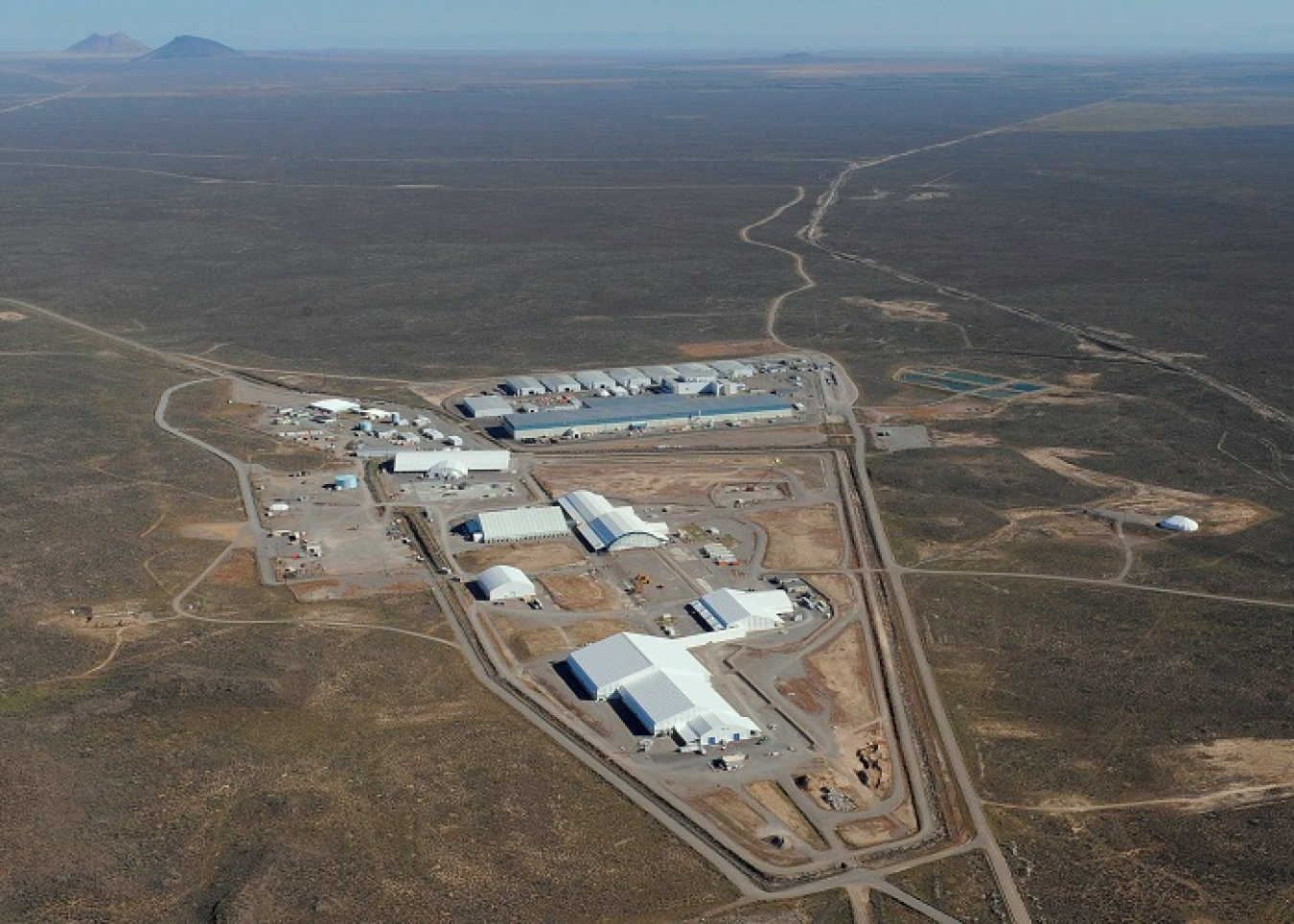
Part of the INL facility Source: Department of Energy.
Recently governor Brad Little has come out stating that permanently storing nuclear waste over the ESPA is a “nonstarter.” ICL agrees and is glad to see Idaho’s governor stand up for clean water. However, Little didn’t specifically rule out the possibility of permanently storing nuclear waste elsewhere in Idaho and amending the 1995 Settlement Agreement to do that. To date, there has been no detailed study or investigation of other locations in Idaho that could be a suitable nuclear waste storage site.
At the end of the day, responsible and smart expansion of nuclear energy could play a significant role in energy needs while addressing climate change driven by the burning of fossil fuels. INL’s current work plays a role in this effort and is commendable, but we shouldn’t be jumping into half-baked proposals to push nuclear energy that don’t make sense for Idaho.
As the NLIC proposal process continues to evolve, ICL will closely monitor the situation to protect Idaho clean water, clean air and public lands.