
In the afternoon hours of a blustery day this past July, a furious weather event known by climatologists as a “lightning siege” swept across large swaths of southern Oregon and Idaho. With it came erratic wind gusts, single-digit humidity, and thousands of dry strikes. The cycle touched off a blaze that wasn’t contained for nearly two months and would go on to burn across almost 600,000 acres across the two states.
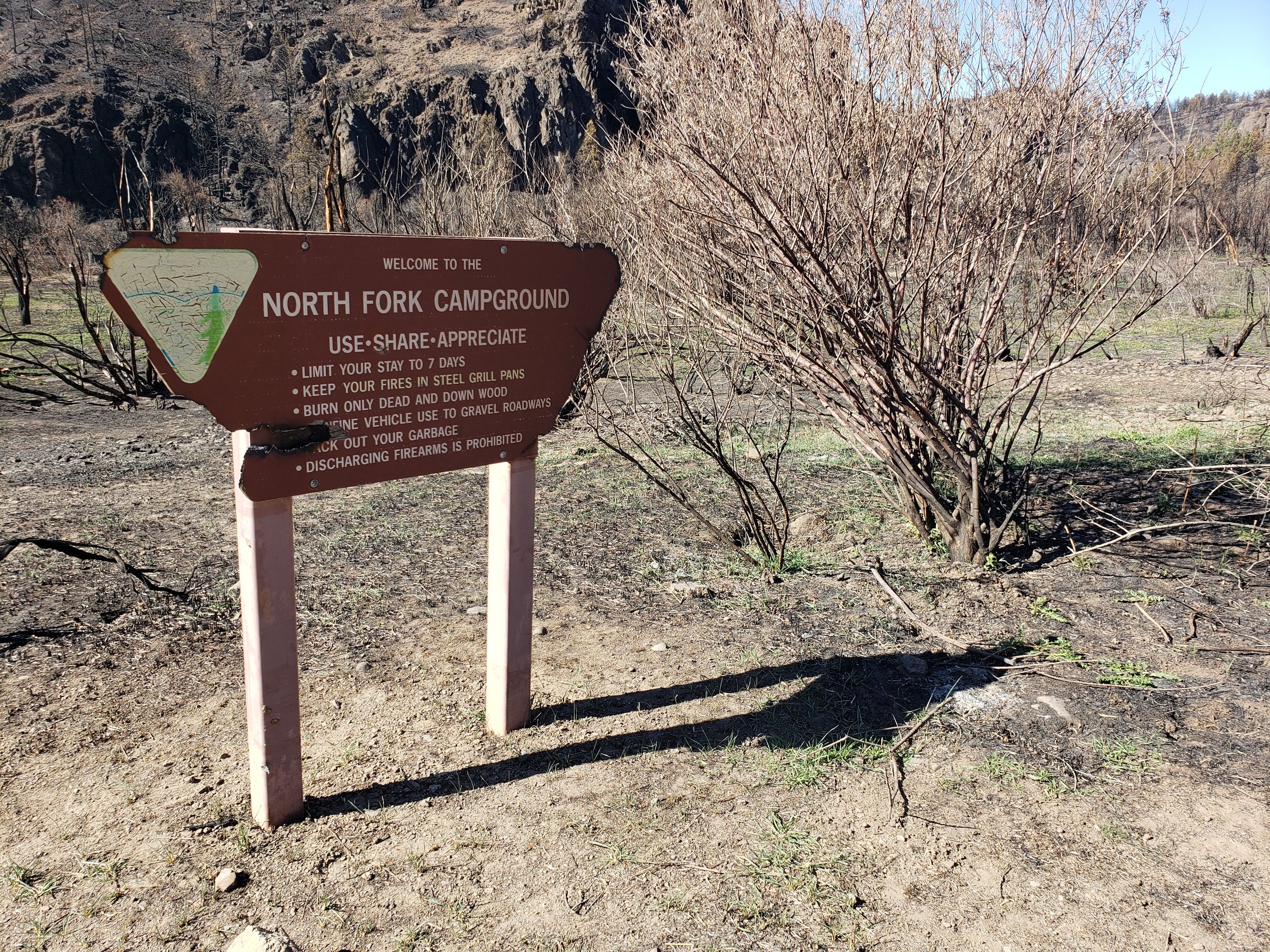
The Big Grass Fire scorched nearly 400,000 acres of sagebrush benches, juniper forests, and deep basalt canyons in Idaho’s Owyhees. Eighty percent of the fire occurred on public lands administered by the Bureau of Land Management (BLM). The burn contains over 200,000 acres of special designation lands including Wilderness, Areas of Critical Environmental Concern, Special Recreation Management Areas, and Wild and Scenic River Corridors, and includes the popular North Fork Owyhee River Campground.
Rare and sensitive bird species like the sage thrasher and the burrowing owl share the ecosystem with the exquisite short-horned lizard and the Columbian spotted frog. Familiar, iconic big game animals like bighorn sheep, pronghorn, mule deer, and elk use the area’s expansive benches and meandering canyons for seasonal range and important habitat security. Redband rainbow trout still manage to hopscotch through the pools and riffles of the Owyhee River and its tributaries, using the cover of native willow and currant bush. Perhaps most emblematic of all species in this vast “sagebrush sea” is the greater Sage-grouse, which have used sparse areas within blankets of sage for breeding and rearing their young since the Pleistocene era.
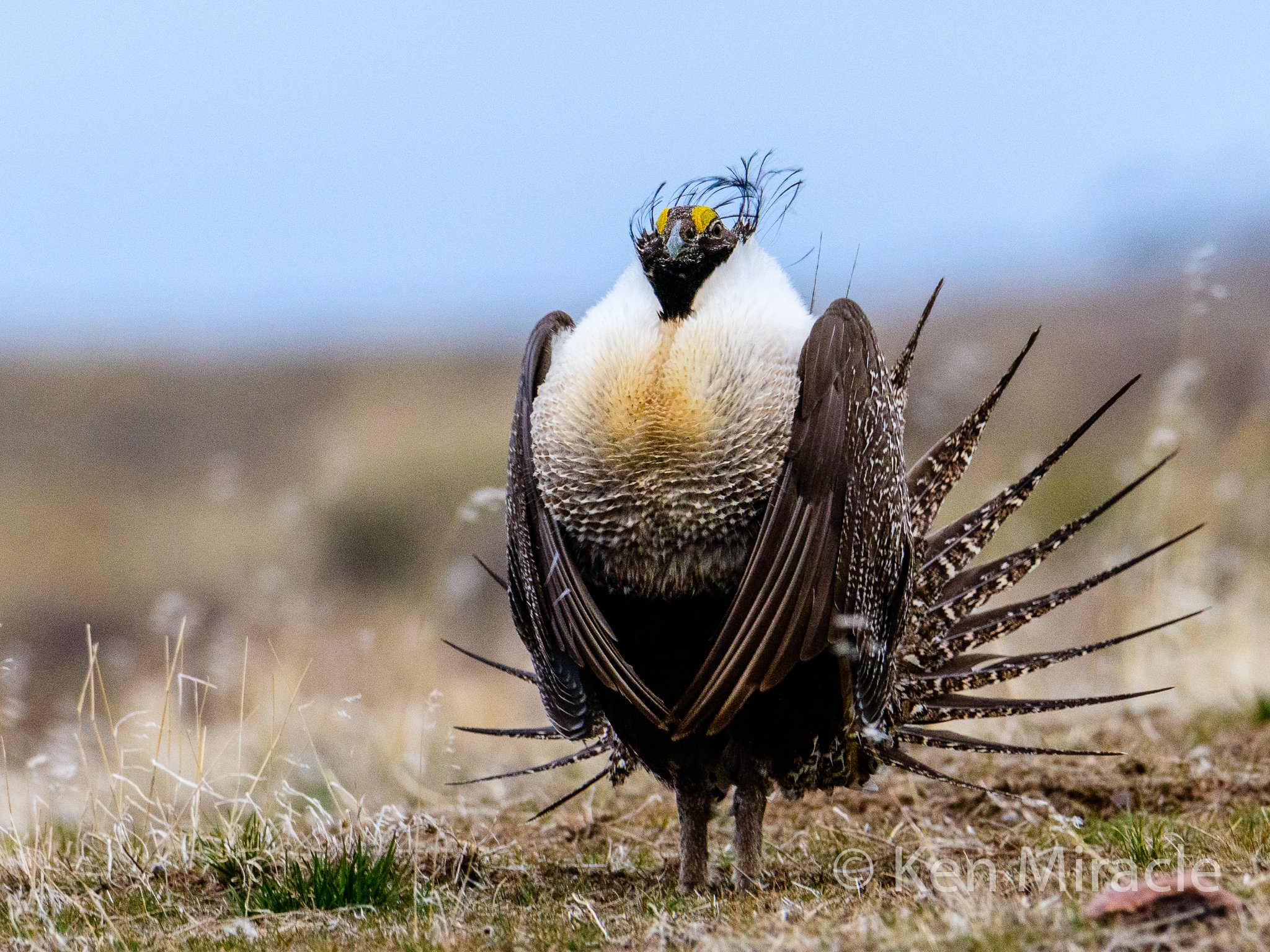
Sage grouse. Ken Miracle photo.
Landscape-scale fires aren’t new to Owyhees. Historically, they would only occur every few decades, renewing native plant communities and helping create productive habitats for an amazing diversity of animals.
However, in recent decades, the frequency and intensity of fires here have increased as a result of climate change and the proliferation of invasive annual grasses (like cheatgrass and Medusahead), resulting in post-fire grassland monocultures in many previously diverse areas.
Under these challenging circumstances, large-scale fire restoration requires collaboration and technical expertise from many disciplines.
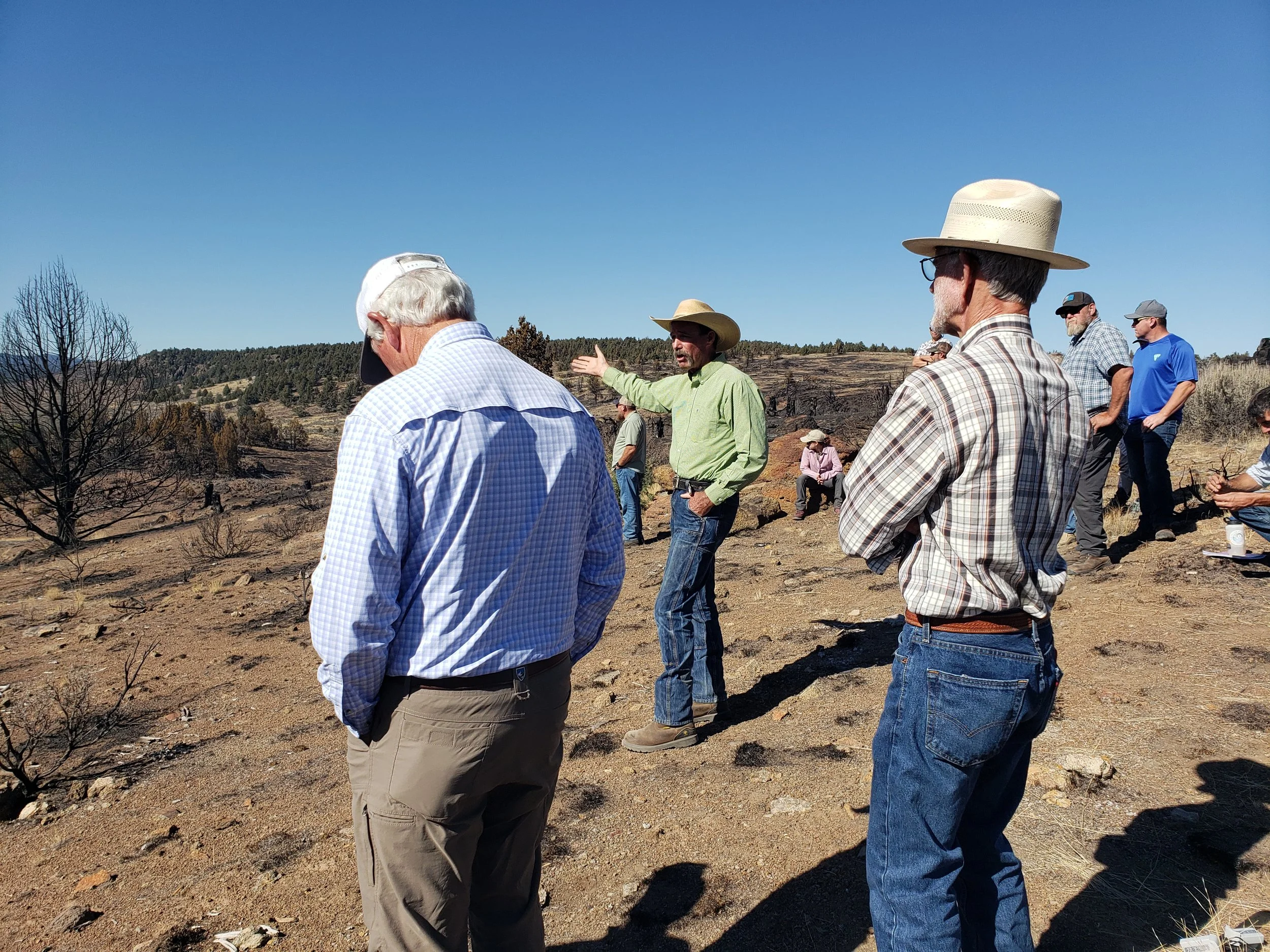
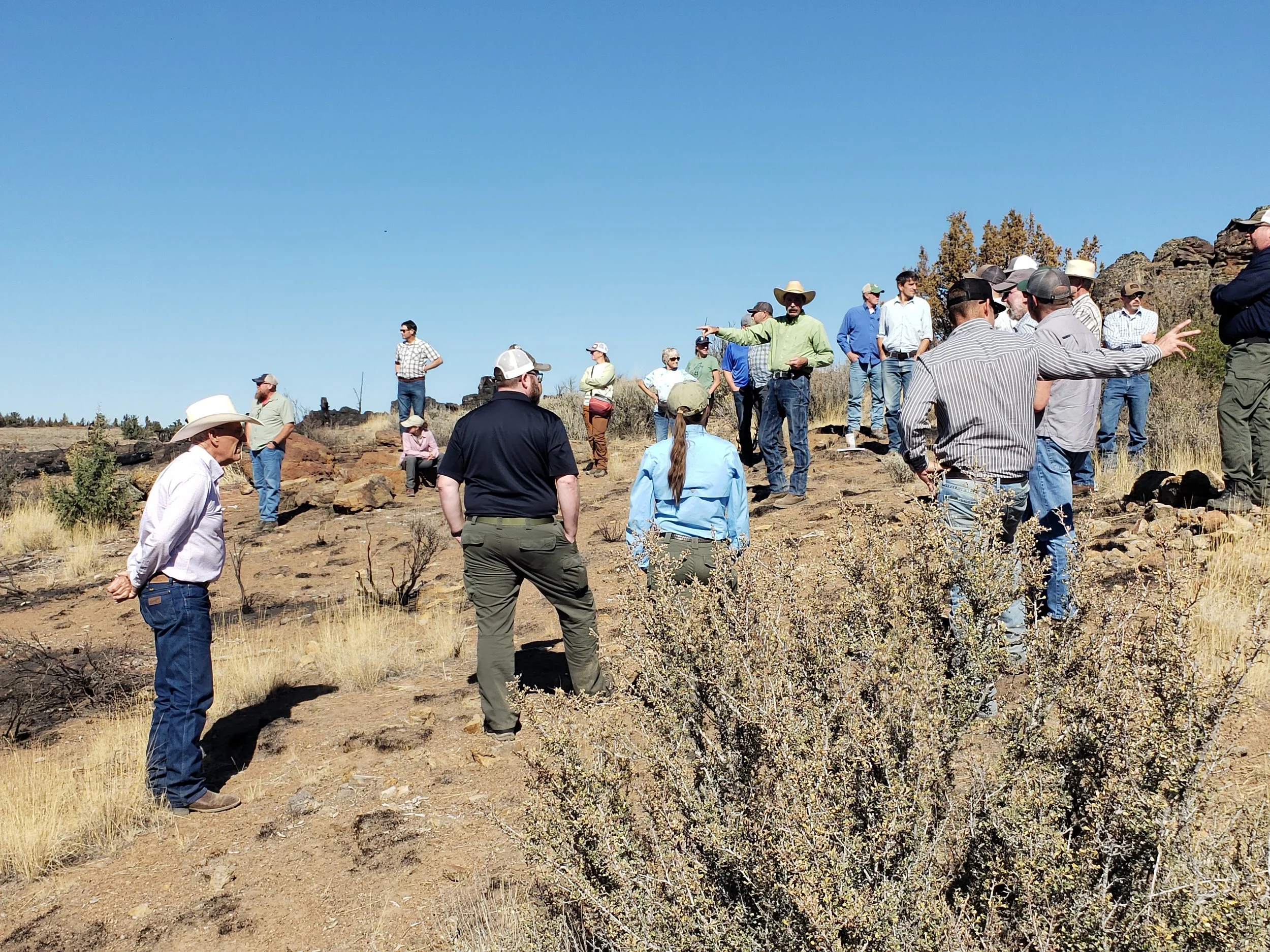
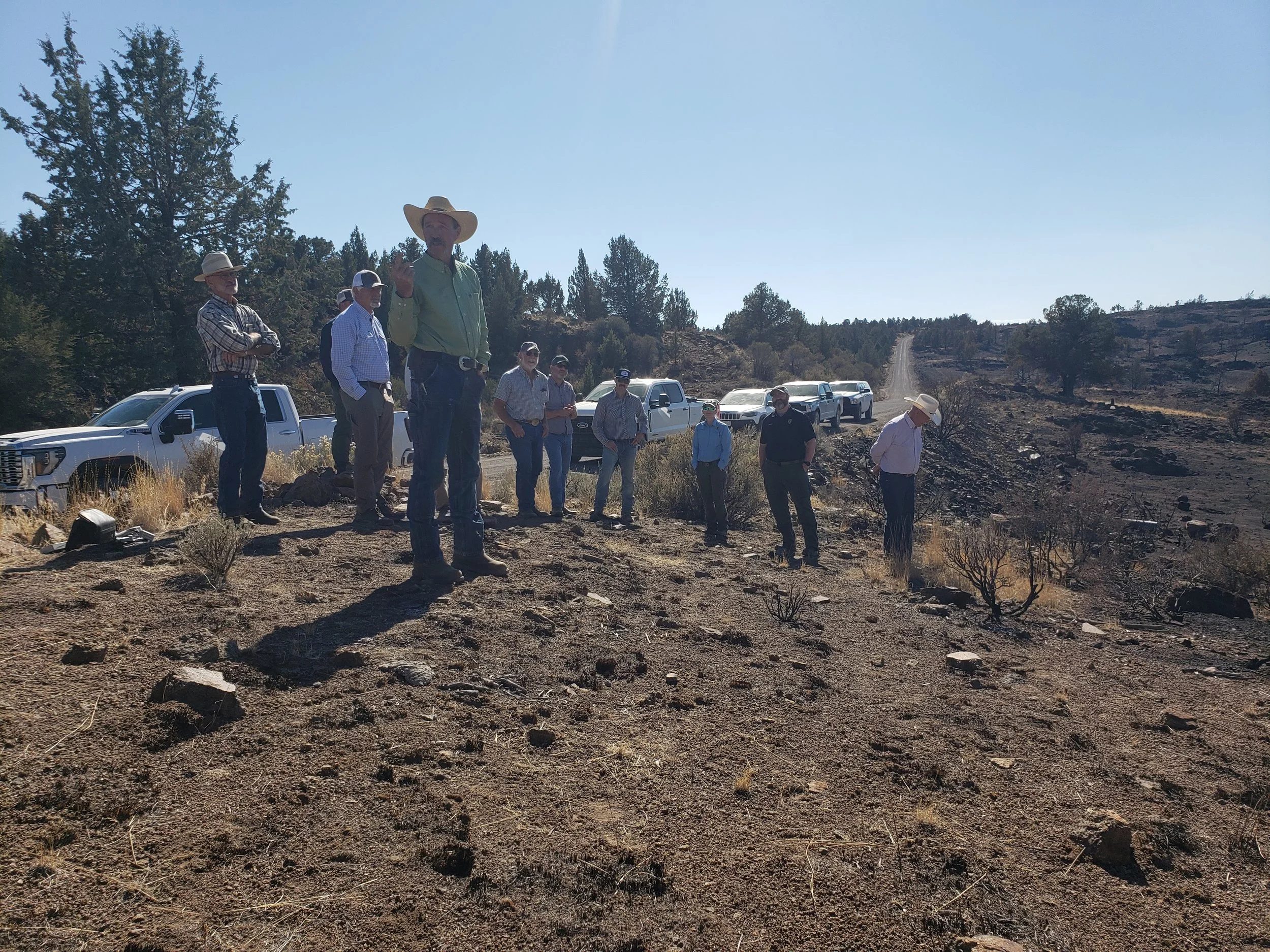
Recently, members of the longstanding Owyhee County Sage-grouse Local Working Group and the Sage-grouse Initiative—including staff from Idaho Conservation League—toured the Big Grass fire scar along the Mud Flat Road. The backcountry ribbon of dirt and gravel stretches from Jordan Valley, Oregon, to Grandview, Idaho. The diverse group also included Owyhee County commissioners, cattle ranchers, Congressional delegation staffers, and representatives from the BLM, U.S. Wildland Fire Services, U.S. Fish and Wildlife Service, Idaho Department of Fish and Game (IDFG), U.S Geological Survey, and Boise State University.
The visit to the fire scar provided us all with a clear-eyed understanding about the significant effort and funding needed to have a chance of restoring impaired wildlife habitats, mitigating impacts to Sage-grouse nesting and brood-rearing areas, and rehabilitating these rangelands.
The BLM estimates costs of a five-year post-fire recovery plan at $12.5 million for “emergency stabilization and burned area rehabilitation.” Yet, funding for this work is becoming increasingly competitive across the U.S. Some estimates suggest that requests are ten times higher than congressional funding. Securing vital resources for recovery and monitoring efforts for Big Grass will require diverse voices to spotlight the real-world impacts of the fire and show elected leaders how important these lands are to Idahoans.
Some good news coming after the post-fire assessment of Big Grass is that two-thirds of the soils only experienced low burn severity and 30% of the area within the fire perimeter survived entirely as “unburned islands.” Range experts and soils specialists believe the low intensity nature of the burn was due to the relatively high elevation terrain in the area (5,000+ feet). IDFG is optimistic that bunchgrasses, riparian areas, and aspen thickets will recover quickly in many areas.
However, overall survival of vegetation that had covered those soils before the fire was highly variable. Much of the sage and bitterbrush—vital for Sage-grouse and other native species—is unlikely to recover naturally and will need to be re-established with widescale seeding and planting in severely burned areas. Big Grass impacted over a dozen Sage-grouse breeding areas, which are known as leks. Without action to return forage and cover to these sites, survival rates of Sage-grouse hens will quickly decline and the lek areas will likely be abandoned.
Collection of local seed stock by volunteers will begin in November 2026 and the seeds will be broadcast over 100,000+ acres in targeted areas throughout the winter. Those efforts will be paired with chemical treatments to suppress the emergence of annual invasive grasses. Successful revegetation will largely depend on the weather—particularly favorable precipitation and temperatures—for the new plants to take hold.
As efforts to restore habitats damaged by the Big Grass fire begin to take shape, it is important to remember how many advocates this special place has. There’s also an opportunity to learn from past restoration successes…and failures. The Local Owyhee Working Group has shown the resolve to do big things in the past. Now, they are again setting the stage for an ambitious undertaking that will hopefully restore this large tract of wildlands and the animals that call it home. Success is dependent on adequate funding, the use of proven rehabilitation actions, a willingness to explore innovative techniques, robust monitoring, and some luck from Mother Nature.
Instead of continuing to hope for the best with post-fire restoration efforts, we need to restore our rangelands and forests proactively to be more resilient to wildfires. This means prioritizing native plants, reconnecting habitat, and managing invasive grasses before the next fire comes. This also means getting a handle on the carbon emissions fueling these wildfires. This all requires that Congress provide the BLM with sufficient funding and staffing to get the work done—instead of continuing to defund the agency. These investments ultimately benefit all of us in terms of healthy and resilient landscapes, watersheds, wildlife, and rural communities.