The Future for Sage-grouse is Far from Certain
One reason Idahoans feel such a deep bond with our native wildlife is the remarkable diversity of species that call our state home. It’s difficult to lose curiosity when around nearly every bend in the landscape, there’s a fascinating creature to admire for its beauty, resilience, or mystery.
Early each spring, the Greater sage-grouse certainly inspires that renewed sense of wonder as it begins its spectacular annual courtship rituals. Starting in February and March, the birds gather on breeding grounds known as leks—a Swedish word meaning “play.” There, males strut amidst the sagebrush, drumming the yellow air sacs in their bright white breasts in a display so striking that it has been featured in nature documentaries since the days of Marlin Perkins and Wild Kingdom.
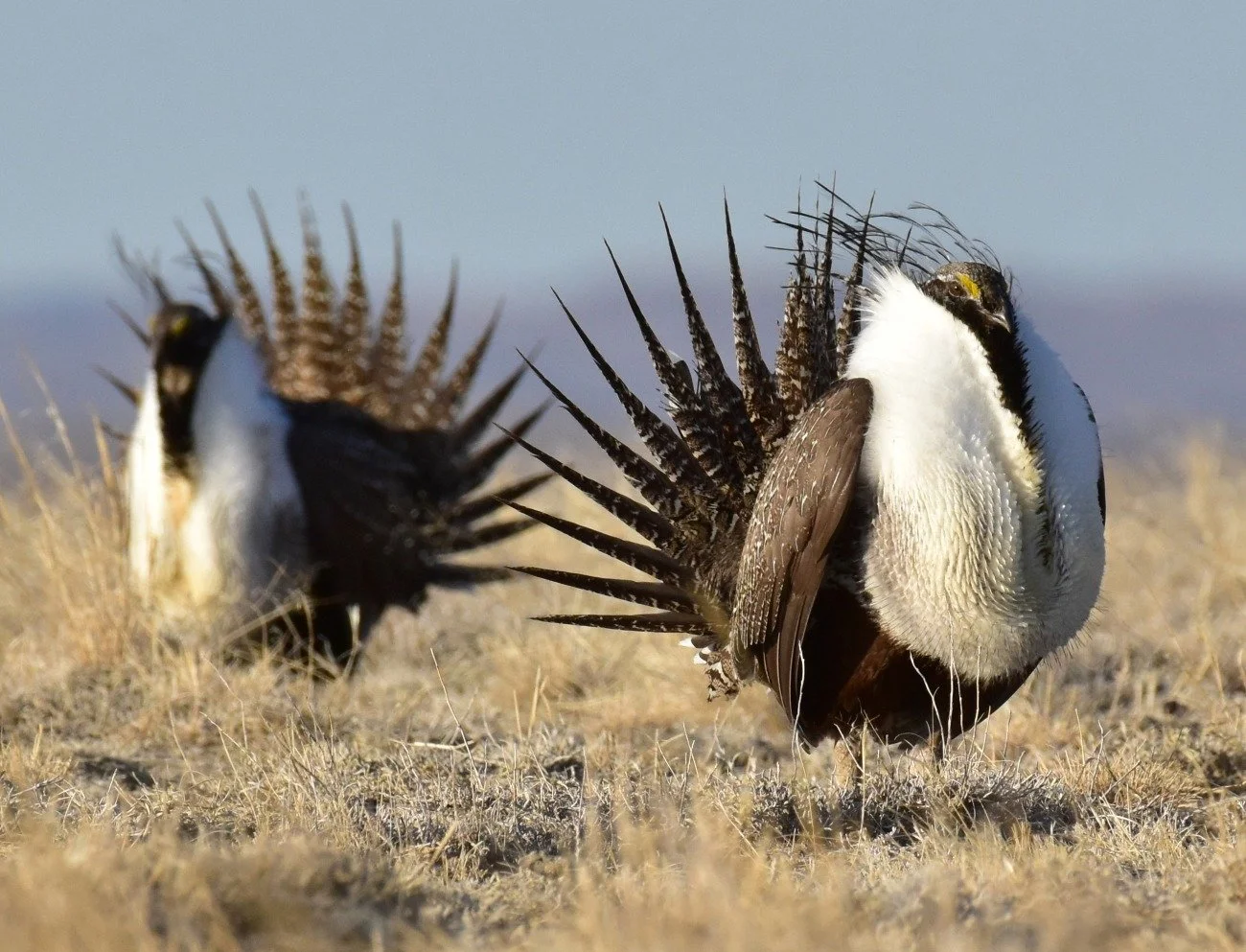
The western “sagebrush sea” has been home to this keystone species going back to the Pleistocene, much as Idaho’s Snake River watershed has long supported salmon and steelhead. Just as those fish need clean water and unimpeded migratory conditions, the iconic Greater sage-grouse depends on large, contiguous, high-quality sagebrush steppe—landscapes that once stretched across the pre-settlement West.
Sage-grouse need few things besides intact, undisturbed landscapes. Above all, they need sagebrush—most often big sagebrush, as well as low or black sagebrush, depending on the area and time of year. This deep ecological relationship guides birds back to the same seasonal ranges year after year, along precise migratory routes. Healthy breeding habitat includes a sagebrush overstory with bunchgrasses, forbs and insects, important for survival of young chicks. Birds may migrate up to 50 miles from breeding areas to find summer ranges with productive food resources at a variety of elevations. Sage-grouse also rely on large expanses of flat, open terrain where avian predators have few places to perch including trees and energy infrastructure like power poles.
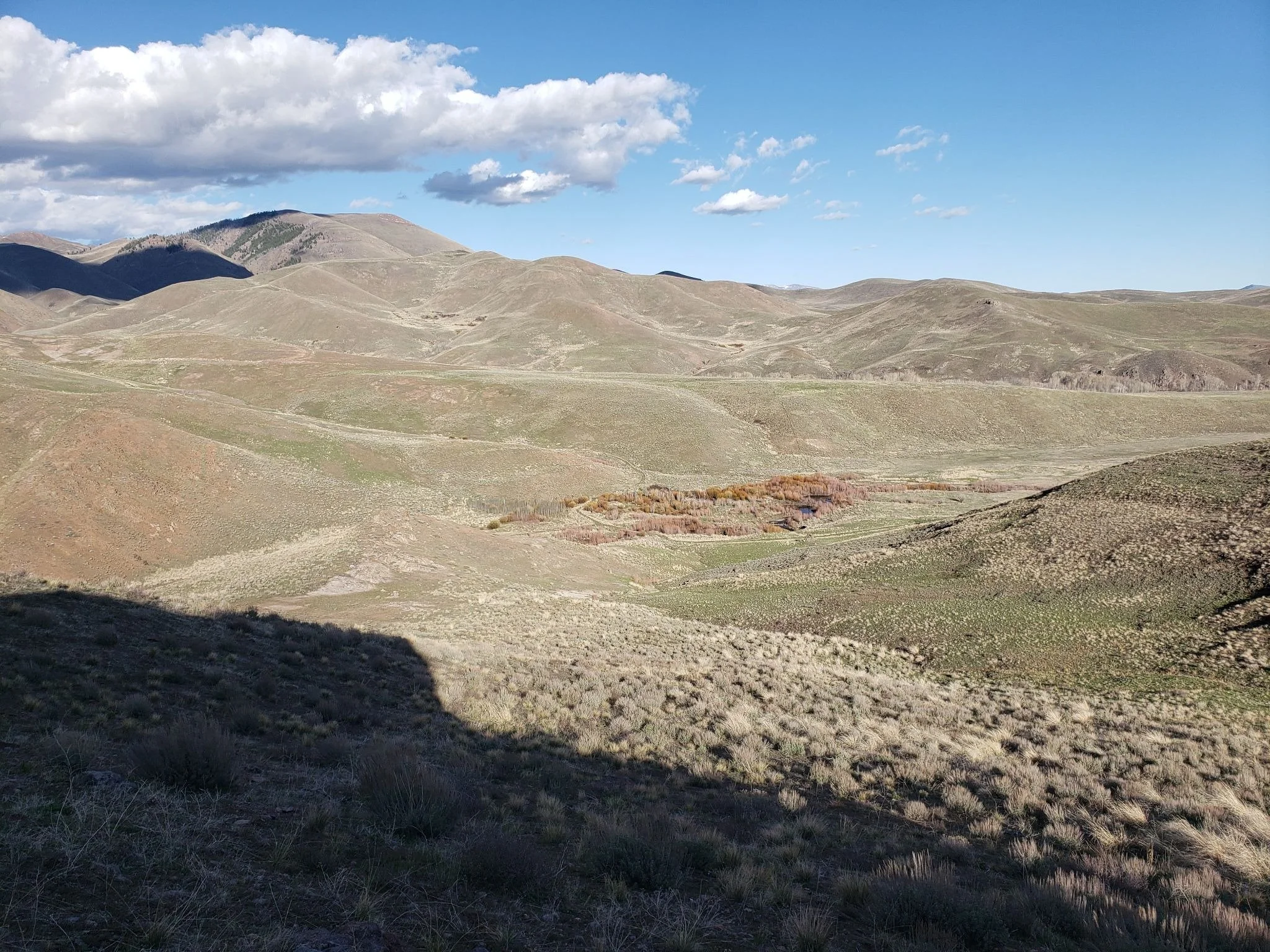
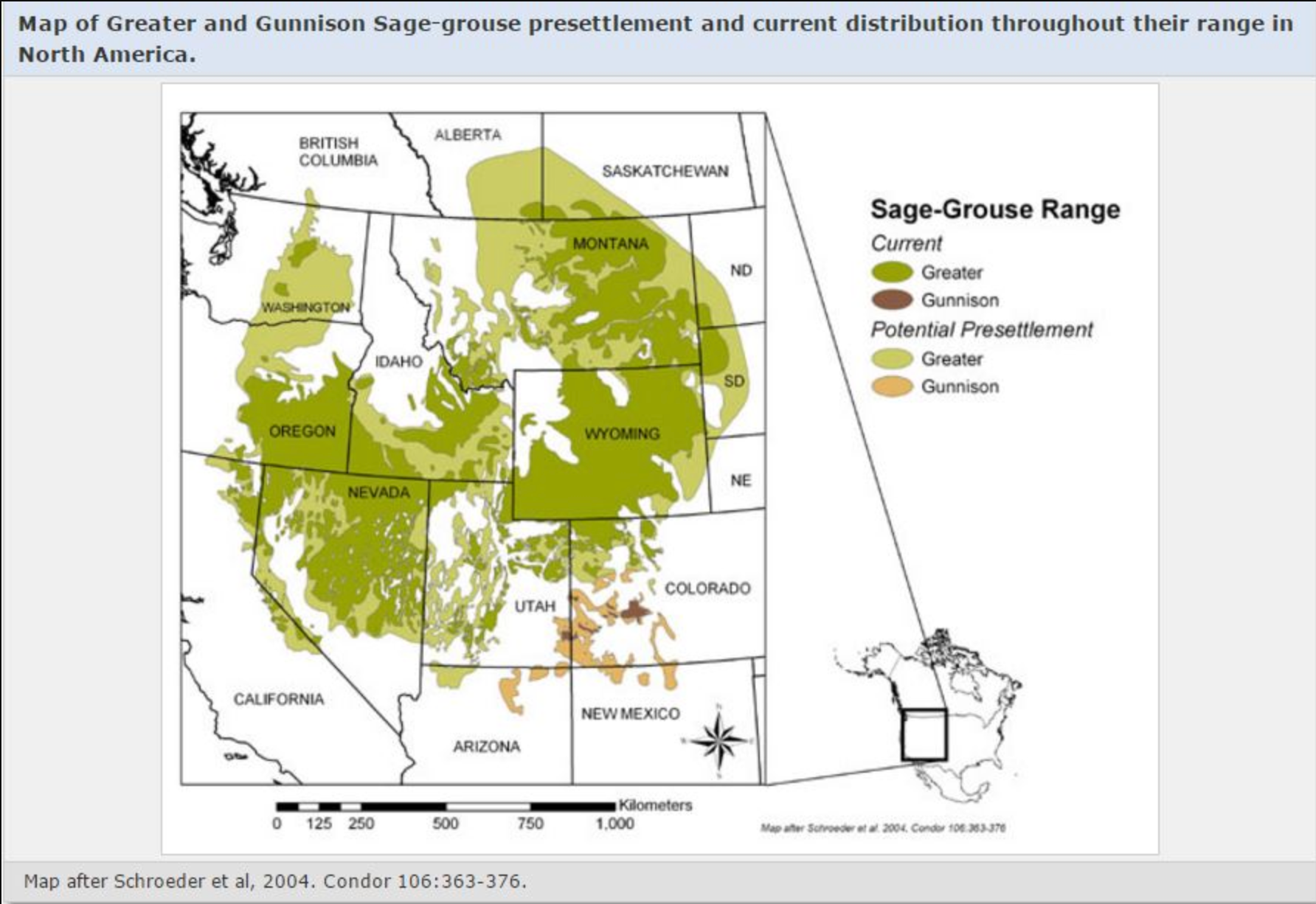
Millions of sage-grouse once ranged from the middle of Oregon and northeastern California to western South Dakota. Today, an estimated 800,000 remain. Early conservationists like William Hornady warned of declines in sage-grouse populations as early as 1916, after the proliferation of automobiles and the advent of pump shotguns.
The threats facing sage-grouse have only multiplied over the last century. Early threats like overharvest, habitat fragmentation, destructive grazing practices, and fence-building have been joined by energy development and expanding infrastructure, resource extraction, invasive cheatgrass, drought, and range-wide mega-fires. Together, these forces destroy an estimated 1.3 million acres of sagebrush every year across the West.
The consequences are stark: range-wide, sage-grouse populations have declined by 80% in the last 60 years. In Idaho alone, we’ve lost at least 50% of our birds in just the last 20 years.
In 2010, the U.S. Fish and Wildlife Service determined that Greater sage-grouse populations warranted protection under the Endangered Species Act (ESA). However, following an extensive collaborative effort across the West involving federal and state agencies, conservation organizations, ranchers, and industry representatives, the agency reversed course after the Bureau of Land Management (BLM) adopted new range-wide management plans in 2015.
Recently, the BLM concluded its third round of land use planning—largely driven by alternating policy mandates handed down from Administrations dating back to the Obama era.
The latest revision—the 2025 Approved Resource Management Plan Amendment (ARMPA)—includes improved mapping of priority, important and general habitat, including a recently documented 100+ mile wildlife corridor in southwest Idaho used by sage-grouse.
However, the ARMPA also weakens several provisions established under the 2015 plans in response to administration priorities related to domestic energy development. It follows guidance from Executive Order 14154, Unleashing American Energy, and covers more than 70 million acres across Idaho and seven other western states. According to the administration,“We are strengthening American energy security while ensuring the sage-grouse continues to thrive,” said Acting Bureau of Land Management Director, Bill Groffy. However, ICL views the revisions as another in a long series of industry accommodations that further diminish the long-term prognosis for sage-grouse.
Among the most concerning changes:
Allowing the BLM to make more exceptions to allow development around lekking areas
Removing mitigation requirements where impacts are unavoidable
Replacing a 7” grass-height standard for cattle grazing with less specific “suitable nesting cover” language, which could encourage overgrazing
Revisions to priority habitat maps and expansion of areas for allowable human-caused disturbance
Changes to population thresholds used to identify and respond to localized and regional declines
Elsewhere in the West, requirements to prioritize new oil and gas leasing outside of sage-grouse range have been removed, once again placing core sage-grouse habitat at risk.
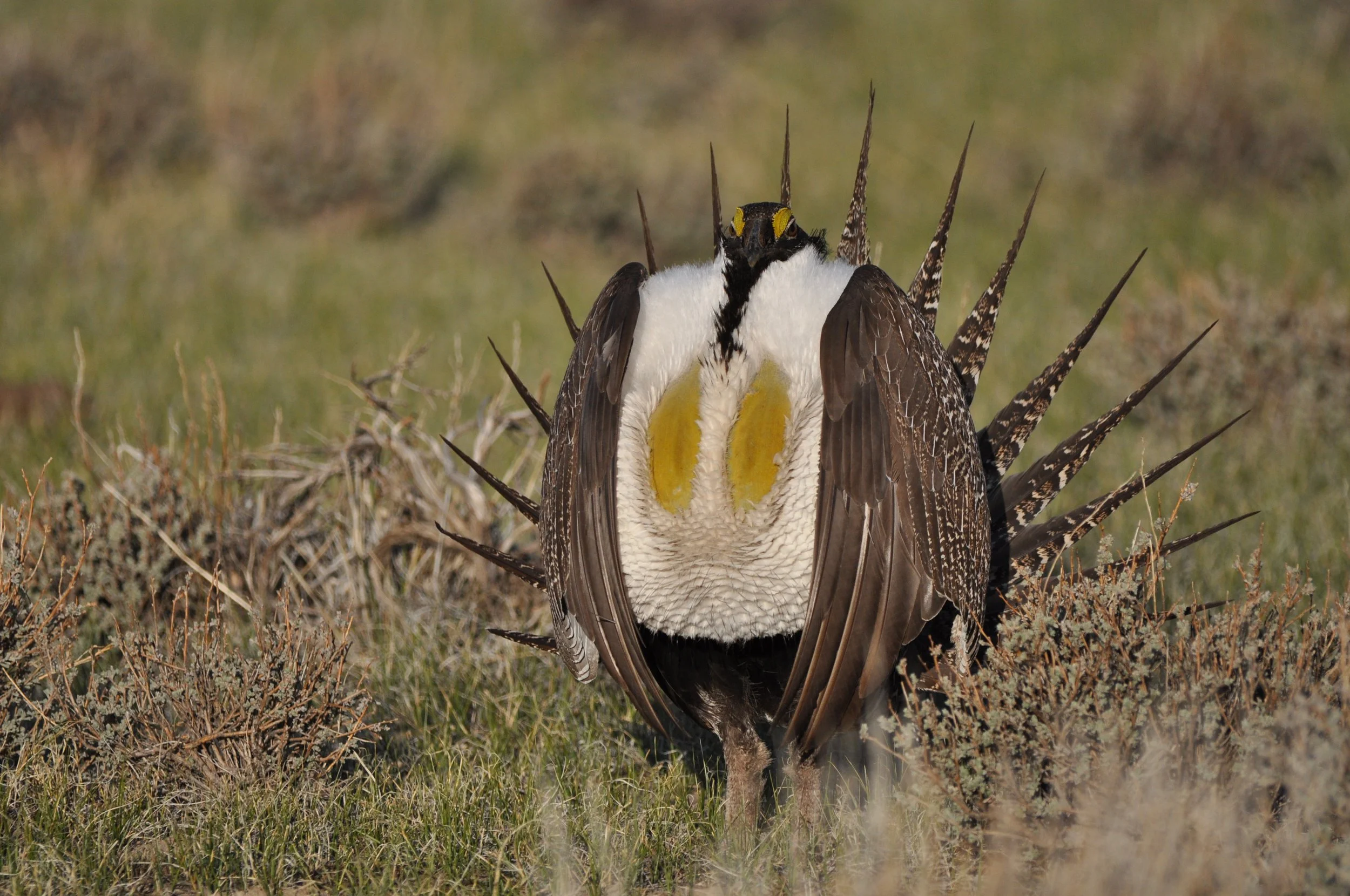
USFWS, Jeannie Stafford photo.
Last month, several western conservation groups, led by the Center for Biological Diversity and represented by Advocates for the West, filed suit in Montana arguing that the revised plans lack scientific support and fail to provide adequate protections for the species. The challenge characterizes the 2025 ARMPA as having removed protections from 11 million acres of prime sage-grouse habitat.
ICL will continue monitoring the litigation. Until the challenge is resolved, the common sense and collaborative thinking that shaped measures to help sage-grouse a decade ago must be revived. We have re-engaged with the Owyhee County Sage-grouse Local Working Group, which previously collaborated on recommendations that informed the 2015 management plans. Voluntary actions from industry, agriculture, and the public which exceed the 2025 ARMPA requirements can still provide important safeguards where federal protections have weakened. Fire restoration practices, corporate responsibility, and thoughtful county planning all have a role to play in protecting Idaho’s sage-grouse country.
Living in Idaho means having the opportunity to experience wild places that make us feel alive and intimately connected to the wildlife we share this state with. For many of us, simply knowing that sage-grouse still gather to dance each spring is enough to care.
Whatever happens in the latest round of legal and political battles, one clear truth remains: Greater sage-grouse are disappearing because the Sagebrush Sea is disappearing. There is no other Sea for these birds. In a state without coal mines, they are Idaho’s canary in the coal mine. We must do better for the birds. We must do better for ourselves.