
Land, Energy, and Choice: What’s at Stake in Bannock County’s Ordinance Update
Editor’s Note: This blog is written by ICL’s 2026 Andrus Scholar Meghan Calley.
As Bannock County revisits its Land Use & Development Ordinance, decisions about alternative energy are an important focus of the conversation. In 2024, Bannock County Commissioners banned large-scale solar and wind projects. Now, ongoing updates to the county’s planning and zoning ordinance may reverse that ban. How Bannock County moves forward will have lasting impacts on energy costs and opportunities for everyone in the county.
Idaho’s landscapes are shaped by both public lands and working lands. Public lands make up more than 60% of the state, giving Idahoans access to some of the largest open spaces in the country. Agriculture is another fundamental part of Idaho’s identity and economy. According to the2022 USDA Census of Agriculture, there were 22,877 farms and ranches in Idaho, accounting for 22% of Idaho's land. A recent study from the University of Idaho estimated the annual value of agricultural sales at $32.7 billion. Of those farms, 94% are family-owned and operated, highlighting the agricultural livelihoods that are central to communities like Bannock County.
At the same time,Idaho is the second fastest-growing state in the country. Between 2017 and 2022, Idaho lost 144,000 acres of agricultural land, driven not by energy development, but by population growth, housing development, urban sprawl, and broader economic changes. Once lost, much of this land rarely returns to farming, placing additional pressure on rural communities and families. This population growth is also reshaping Idaho’s energy needs. Idaho Power estimates that over the coming years, summer peak demand could rise from about 3,750 megawatts (MW) to about 5,250 MW, an increase of about 40%.
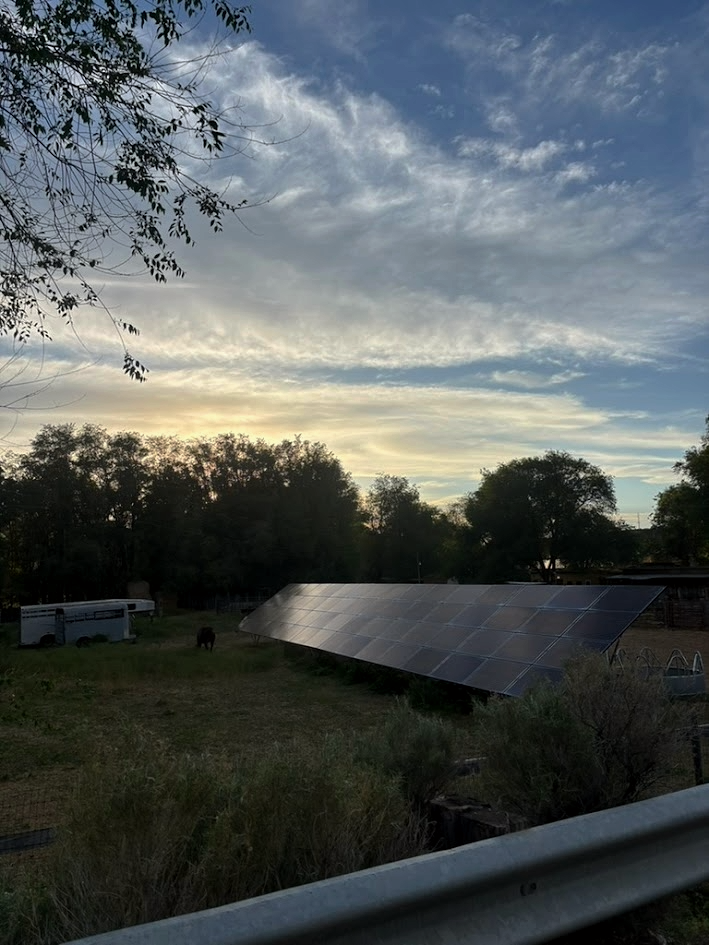
Renewable energy development, including solar, is one of the most effective ways to bring new energy capacity to the grid while diversifying Idaho’s energy and reducing the emissions that are already impacting the region with changing precipitation patterns, shifts in snowpack, more extreme heat events, and increasingly unpredictable growing seasons. When solar development enters the conversation, fear of losing agricultural land often follows. Considering agriculture’s importance to Idaho’s economy and identity, these concerns are understandable. However, not all land is equal or produces the same output. Marginal land is fundamentally different from highly productive farmland, and effective policy should recognize this distinction.
For some landowners, solar isn’t a threat to their livelihood but a tool to help preserve it for the future. Lytton Bastian, a third-generation rancher, has spent years working to improve and sustain his family ranch. He was in negotiations to lease a portion of his land to a solar company when the 2024 ban halted those plans. The proposed project site was land that had once been, as Lytton describes it, “loosely” a potato farm, but today is only usable for grazing for about two months out of the year. For Lytton, the solar lease was more than income. It was an opportunity to reinvest in his operation and support the local community. The ban didn’t protect productive farmland but instead overlooked experiences like Lytton’s and prevented real opportunities for a working rancher and his community. A more balanced policy could.
One proposed change to the updated ordinance would allow wind and solar projects through a Conditional Use Permit (CUP) process in Agricultural, Commercial General, Industrial, and Light Industrial zones. This is a notable shift from a countywide ban. The process would require applicants to submit extensive plans to address environmental impacts, emergency responses, wildlife impacts, and other community concerns. The CUP process would also provide community members with the opportunity to weigh in on individual projects, rather than a total ban that removes landowners’ choice completely. The upcoming public hearings are Bannock County’s opportunity to build a policy that can help protect agricultural land, support affordable energy, and ensure landowners maintain the ability to make decisions about the land they know well.