
Last week brought me back to a moment from 2025 when it hit me how difficult standing up for wildlife, lands, clean air and water can be in Idaho. In a single week, two deeply troubling bills cleared the legislature.
One called for removing grizzlies from Endangered Species Act protections. The other sought to move cyanide mining regulations out of Administrative Rules into Idaho statute—weakening critical environmental safeguards in the process. Both passed. To those of us who care deeply about clean air and water, our public lands, and wildlife, it was a gut punch.
And yet, it is exactly why we do this work—and why your support matters so much. It is an honor to show up every day and represent Idahoans like you who believe our wildlife, public lands, clean air and clean water are worth fighting for.
One Week, Two Wins
Last week was a different kind of week. Two bills we care deeply about moved forward—and this time, we had reason to celebrate.
One bright spot was a Public Lands Resolution that cleared the process, advancing past two competing constitutional amendments. This memorial urges Idaho’s congressional delegation to continue opposing efforts to sell or transfer federal public lands and to support measures such as the Public Lands in Public Hands Act. Its success likely came down to its simplicity: it doesn’t change the constitution or create new law—it simply affirms the Legislature’s shared position.
The second win was a Wildlife Crossings Resolution. Championed by Representative Petzke (R-Meridian) and Senator Bernt (R-Meridian), it moved smoothly through both chambers to adoption. This resolution recognizes the urgent need for Idaho’s legislature, congressional delegation, Governor, and Directors of Idaho Fish and Game and Idaho Transportation Department to improve public safety on Idaho’s roadways while raising awareness of big game migration corridors. Wildlife-vehicle collisions are a serious and preventable risk that can be reduced by targeted infrastructure projects. Infrastructure like wildlife crossings are win-win-win solutions: they save lives, they save wildlife, and they save money.
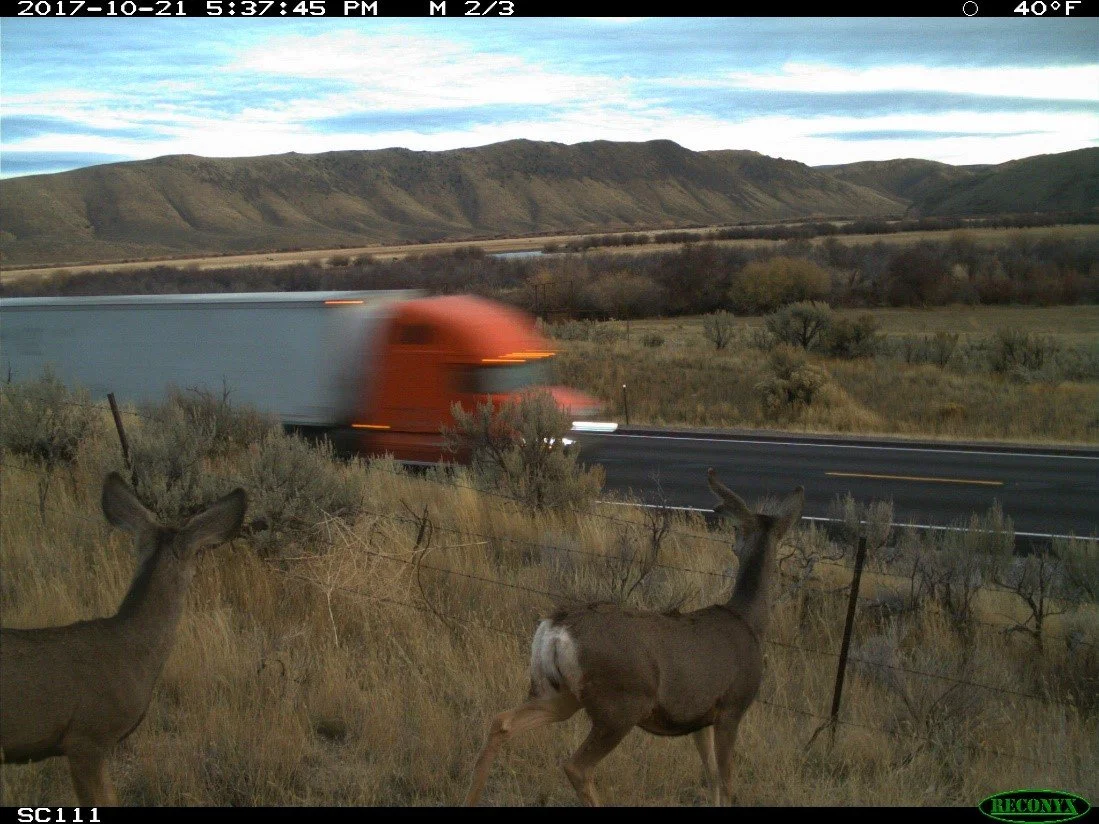
Wildlife crossings are commonsense solutions that save lives, save wildlife, and save money. ITD photo.
And One Defeat….
Harriman State Park is an Idaho gem—11,000 acres of pristine landscape steeped in rich history. Its 20 preserved Railroad Ranch buildings tell the story of its past, set within a vast wildlife refuge home to moose, elk, bears, wolves, and Sandhill cranes. It is also a critical habitat for nesting and overwintering Trumpeter swans.
This extraordinary place was a gift from the Harriman family—with a clear condition: honor the Harriman Gift Agreement or risk losing it. At the core of this agreement is a simple principle—merit-based hiring to ensure park management remains professional and free from political influence.
Idahoans have made that same choice before. In 1938, 76% of voters supported professional, science-based wildlife management through the Idaho Department of Fish and Game—deliberately insulating these decisions from politics. It was the right decision then, and it remains the right decision today.
That’s why it’s so concerning that a bill stripping three key agencies—Idaho Fish and Game, Idaho Transportation Department, and Idaho Parks & Recreation—of their independent director appointment authority, passed both chambers last week. Senate Bill 1300 now awaits the Governor’s decision.
Rather than speculate on the outcome, we are taking action. ICL has requested a meeting with the Governor’s office to make clear what’s at stake— and the lasting damage this bill could cause.
A Little More on Energy and Data Centers
ICL anticipated energy would be a hot topic during this legislative session, especially with the momentum behind renewable energy legislation coming out of 2025. Unfortunately, the plug-in portable solar bill we supported has stalled and made no progress. There was, however, a meaningful step forward on the local level. The City of Boise is now better positioned to plan for future water needs following the passage of the Geothermal Water, Municipal Use bill. This new law promotes responsible geothermal development by requiring reinjection through closed loop systems—helping protect aquifers and prevent groundwater depletion.
At the same time, ICL has concerns about a structural change in state government. The merger of the Office of Energy, Minerals and Resources with the Office of Species Conservation—now the Office of Species Minerals, and Energy Coordination—raises concerns. While framed as a way to streamline administrative capacity and reduce bureaucratic redundancy, combining these distinct entities (and missions) under a single office risks concentrating too much authority, overextending leadership, and increasing vulnerability to political and industry pressure.
On a more encouraging note, ICL is pleased to see bipartisan support for the Sales Tax Exemption on Data Centers bill, which passed the House with near unanimity and advanced out of the Senate Committee before being sent to the 14th Order. The bill takes a more balanced approach to incentives while improving transparency around the impacts of data centers. It narrows the sales tax exemption to server equipment for new facilities, phases out eligibility for the large capital investment property tax exemption, and adds new requirements around utility cost recovery and water use notification. It also establishes reporting requirements on economic, energy, and water impacts. Overall, it’s a thoughtful, forward-looking bill, and ICL anticipates a vote on the Senate floor before adjournment.
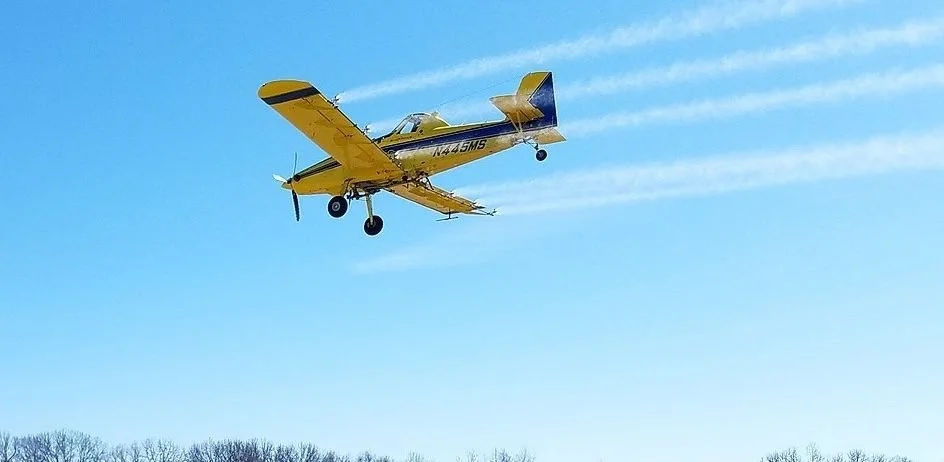
ISDA photo.
Finally, Pesticides Recapped
As noted in earlier newsletters, the Congressional Farm, Food and National Security Act of 2026 advanced out of the House Agriculture Committee in March on a 34-17 vote. The next step is a vote by the full House of Representatives, which was expected before the Congress Easter break. Congress is now on a two-week recess, making mid-April the likely window for action.
Now is the time to speak out.
The bill includes a dangerous carve-out that would shield herbicide and pesticide manufacturers from “failure-to-warn” lawsuits—even when people suffer serious harm by exposure to these chemicals. This provision would block state and local legal actions and make EPA-approved labeling the sole standard for liability, even in cases involving cancer and other severe health impacts.
Congress should not take accountability for these companies off the table. Urge your representatives to oppose this provision and take a stand for the rights and health of everyday Idahoans: Take Action!
Alex’s Analysis
This session has been my first real window into working inside the legislative process, and it has shown me just how difficult advocacy can be. In many ways, the system is designed to make change hard. That can be frustrating, but it also reflects a process meant to move carefully, weigh competing interests, and ensure decisions are not made lightly.
What has stood out most is the sheer volume of issues competing for attention. There have been weeks when it felt like every bill touched something I care deeply about. With so much happening at once, it is easy to feel overwhelmed. In truth, it can be difficult not to.
Still, this is what advocacy looks like. It is steady, often incremental work that requires persistence, patience, and a willingness to stay engaged even when progress feels slow. This session has been challenging, but more than anything, it has reinforced my desire to keep doing this work and to continue advocating for the things that matter.
Listen of the Week
This week’s Listen of the Week features Idaho legislators Senator Ben Adams (R-Nampa) and Senator Treg Bernt (R-Meridian). Both delivered passionate speeches on the Senate floor in support of Senate Joint Memorial 111, which seeks to protect Idaho's public lands. This moment at the Statehouse is compelling and moving, and we appreciate the thoughtfulness each legislator showed in advocating for Idaho's natural resources. ICL also recognizes Lieutenant Governor Bedke for his whispered “darn” after hoping to break a tie with his Yes vote. Simply a great Idaho moment.
