
A USFS/IDL land exchange provides a win for all Idahoans
The Idaho Department of Lands (IDL) recently announced that the agency is holding three public meetings (June 23, 24, and 25) in West Central Idaho concerning a potential land exchange involving state parcels around Payette Lake.
Just over six years ago, Trident Holdings, LLC proposed to acquire some 20,000 acres of state endowment lands that surround Payette Lake in McCall. Trident’s ultimate goal was to privatize the lake-adjacent lands, converting highly valued parcels into high end homes, resorts, and golf courses. Trident’s proposal spurred public outcry and served to underscore the deep value Valley County and Idahoans place on Payette Lake, recreation access, and historic traditional uses of the endowment lands that surround Payette Lake such as huckleberry picking, hiking, fishing, hunting, bike riding, snowshoeing, and firewood cutting.
For the past 5 years, ICL has worked with United Payette—a coalition of Valley County residents partnering with local and state-wide organizations—to conserve the endowment lands surrounding Payette and Little Payette Lakes. ICL is a founding member of United Payette and serves as the organization's fiscal sponsor. One avenue that was lightly explored in 2021 was a land exchange between the Idaho Department of Lands (IDL) and the U.S. Forest Service (USFS). Initial conversations were productive but proved unfruitful. Then in 2024, the two land management agencies reinitiated discussions about the possibility of a land exchange that would move the ownership and management of portions of the state-owned endowment lands to the Forest Service. IDL would receive parcels of land from the Forest Service in return, possibly including lands on the west side of the Payette National Forest, and potentially from areas of the Boise, Nez Perce-Clearwater, and Idaho Panhandle National Forests. The exact parcels that would transfer from USFS ownership to IDL are not yet identified.
Why are so many National Forests possibly involved?
One of the reasons there are so many possible sources for lands that may become IDL-owned centers on the concept of value and how much the lands around Payette Lake are worth in comparison to other lands IDL hopes to acquire from the Forest Service. Although the endowment lands around Payette Lake are not highly productive timberlands, these lakefront properties will appraise high for their waterfront development potential. This exponentially increases the number of acres the Forest Service would need to exchange to reach a value-for-value based exchange. Initial reporting suggested that, based on estimated values, IDL would require an exchange rate of approximately 10:1, or 150,000 acres of Forest land in exchange for 15,000 acres of endowment land around Payette Lake. The reason IDL would receive more acres than the agency would exchange away is based in Constitutional law. Pursuant to the Idaho Constitution, the Land Board must maximize revenue from state endowment lands over the long-term. If the McCall lands have the potential to generate more money for beneficiaries (including public schools, universities, and state hospitals), through sales or disposition, the Land Board must consider those proposals.
This significant disparity can cause alarm, and rightfully so. However, those numbers will certainly decrease, perhaps from both sides of the exchange. Governor Little recognizes that in order for this exchange to remain viable and attractive for all involved parties, the exchange cannot have an exclusive value-based posture and that compromise will be necessary in order for the exchange to advance. The Governor indicated as much in his closing remarks on April 28, 2026, just prior to the Board of Land Commissioners voting on the motion to allow IDL to move forward with due diligence activities. IDL Director Dustin Miller also indicated in a recent interview that the ratio is subject to change as more details become available and discussions between the two land management agencies advance. So while there will likely be disparity regarding the acres each agency will contribute to this exchange, we do believe that the gap will narrow and become more favorable than reporting first suggested.
Are Other Options Being Considered?
A land exchange will likely be necessary to transfer a significant portion of the Payette Endowment Lands into Forest Service ownership. However, a land exchange is not the only tool available. Other approaches, combined with a land exchange, could help protect these lands from future development.
One option is to use federal Land and Water Conservation Fund (LWCF) funding to allow the Forest Service to purchase some of the Payette Endowment Lands directly from the Idaho Department of Lands. While LWCF funding alone is unlikely to be sufficient to acquire all of the lands, it could complement a broader land exchange and reduce the amount of land that would need to be traded.
There is also interest in expanding Ponderosa State Park. To do so, the Idaho Department of Parks and Recreation would need to acquire certain endowment land parcels from the Idaho Department of Lands. Given the high value of the waterfront properties and the limited funding available for park acquisition, this could be challenging. One potential solution would be for the Idaho Department of Parks and Recreation to enter into a lease-to-own agreement with the Idaho Department of Lands. Such an arrangement could allow park expansion to move forward sooner while spreading acquisition costs over time.
Although neither LWCF funding nor a lease-to-own arrangement has been part of the initial discussions, we believe both options deserve serious consideration. Together with a land exchange, they could form a creative package that protects these important lands, expands recreational opportunities, and fulfills the state's obligations to its endowment beneficiaries.
What are the benefits of an exchange?
As this most recent land exchange proposal gains traction, ICL staff and our partners in United Payette are often asked, “Why is this important to me?, What are the benefits beyond McCall?, and How can supporters justify a net loss of our public lands in this exchange?” We believe that the exchange can provide a “win, win, win” scenario for IDL, the USFS, and Idahoans.
A win for McCall, Valley County, and Idaho
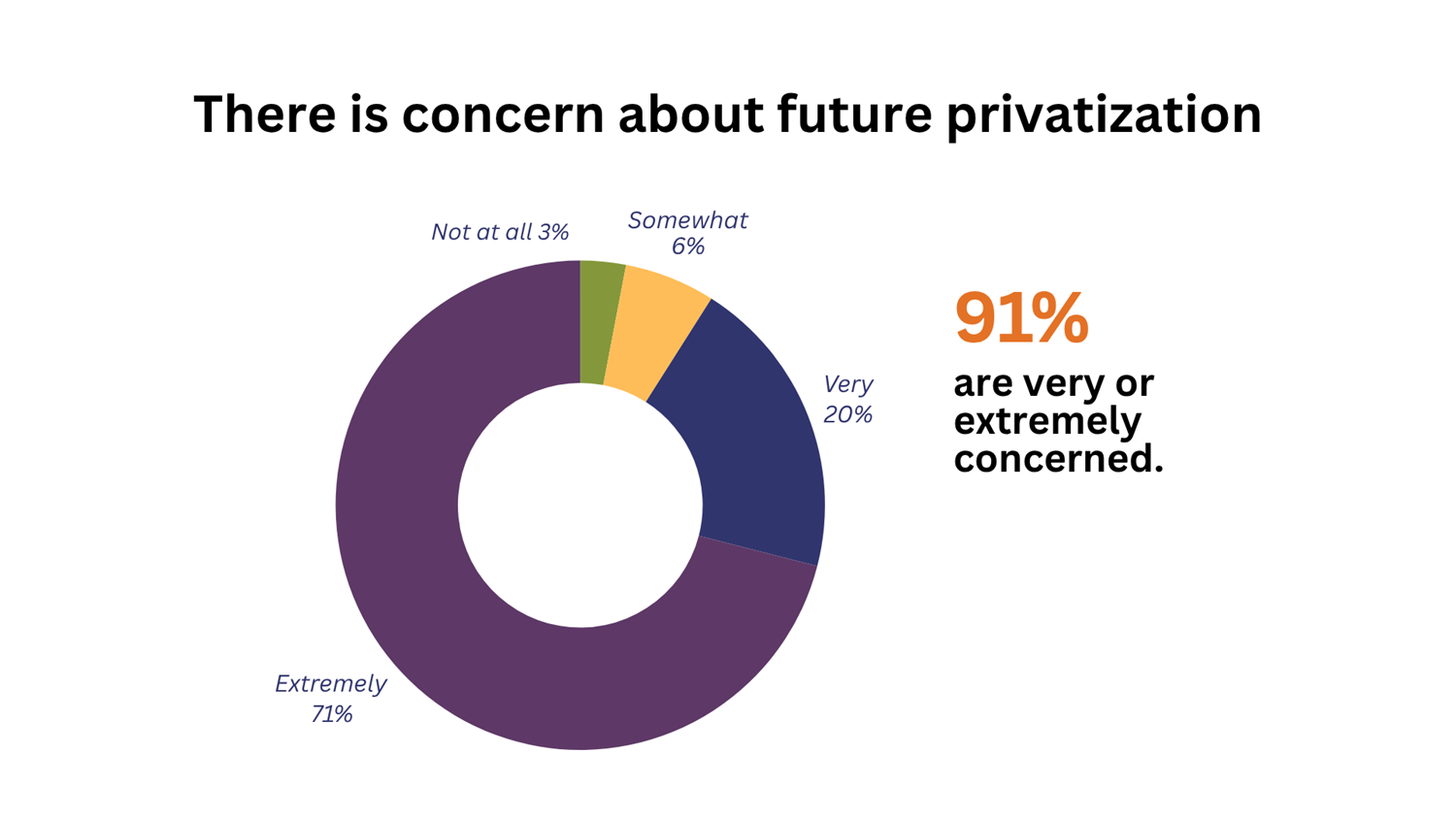
The first win that the public will see directly ties to Valley County. Payette Lake is McCall’s sole source for drinking water and conserving the endowment lands that surround the lake is a giant step toward protecting the North Fork Payette River watershed. Valley County already faces water quality challenges, as demonstrated by the Eurasian milfoil infestation of Payette Lake and the far-too-frequent outbreaks of toxic algae in Cascade Reservoir. United Payette conducted a public survey in 2025 and found that 98% of the survey respondents were concerned about Payette Lake’s water quality.
A transfer of the endowment lands that surround Payette Lake into Forest Service care also ensures that public access for hunting, hiking, fishing, birding, berry and mushroom gathering, cycling, and many other recreation activities will remain open. As it stands, if these lands aren’t producing sufficient returns for the endowment beneficiaries then IDL’s options are limited regarding future management. When other parcels of endowment lands have fallen into the “insufficient returns” category, oftentimes the solution is to dispose of those lands, leading to privatization and development. Were IDL to sell these lands into privatized development, water quality will most certainly diminish due to stormwater runoff and additional nutrient delivery to Payette Lake from lawn fertilizers and septic leachfields (McCall’s infrastructure only extends partway around Payette Lake and any new homes in undeveloped areas will likely require septic systems and wells or direct pumping from Payette Lake for water).
McCall residents aren’t the only ones who would benefit from this exchange. All Idahoans also benefit because Payette Lake is a true gem in the Gem State. Found near the top of the watershed, Payette Lake not only provides drinking water for McCall, but tens of thousands come each year to recreate on or around the lake. The local economy depends heavily on outdoor recreation and tourism centered around Payette Lake. Keeping these lands in public hands and well managed helps protect the lake's natural beauty and recreational opportunities, which support local businesses, residents, and visitors.
Other communities also depend on the waters of the North Fork Payette River for economic prosperity and water, including Cascade, Donnelly, and Horseshoe Bend, as well as the numerous agricultural interests that pull irrigation water from the North Fork Payette or its tributaries. It is also important to remember that while salmon no longer reach Payette Lake, salmon still depend on the cold waters of the North Fork Payette River after the Payette joins the Snake River, flowing through Hells Canyon toward the Pacific Ocean and helping convey and support salmon and steelhead during the in-run and out-run migrations.
A Win for the Forest Service
Yes, it is true that the Forest Service, and the public, will likely contribute more acres to the exchange than the agency receives. That is a net loss of public lands, so how can that be a win for the Forest Service or the public? First, this exchange would provide management continuity for the Forest Service, an agency tasked with sustaining the health, diversity, and productivity of the nation’s forests and grasslands to meet the needs of present and future generations. The exchange would expand the boundaries of the Payette National Forest to include lands adjacent to Payette Lake and connect with other popular areas within the current National Forest boundaries like Bear Basin, Fall Creek, and Blackwell Lake. The exchange would also connect the lands around the lake with current Forest Service lands, removing the potential for a repeat scenario of the DF Development debacle where access to public lands beyond private is often denied or prohibited.
The Forest Service’s mission is better suited to provide the conservation and protection necessary to preserve and potentially enhance Payette Lake’s water quality through ecologically-based management. The Forest Service also has extensive experience managing forests to reduce wildfire risk. Projects like those completed in Bear Basin demonstrate the agency's ability to reduce hazardous fuels and improve forest health. By protecting and restoring these lands over the long term, the Forest Service can help maintain the watershed's natural character, recreational opportunities, and quality of life while accommodating future growth in the region.
If you are wondering how the Forest Service might manage these lands, we encourage you to visit Bear Basin, Ecks Flat, the Thorn Creek area, the Goose Creek area, and the West Face parking area. These locations just outside of McCall provide examples of recent and ongoing forest management that the Payette National Forest has been carrying out for many years.
A win for IDL
The lands IDL is interested in acquiring from the Forest Service in exchange for the endowment lands around Payette Lake are highly productive timberlands with an existing road network, a quality necessary to IDL and the Endowment Trust to continue funding public education and other trust beneficiaries. The exchange could benefit Idaho's endowment by generating more revenue for public schools and other beneficiaries. The timberlands would better fit within the parameters of IDL’s mission, whereas lands that do not actively contribute to the Endowment Trust are often viewed as burdensome to manage, as is the case with the Payette Endowment Lands. When IDL endowment lands have more managerial challenges than the management effort can meet or overcome with positive financial results, then sale and privatization becomes a real and concerning possibility. As we saw with the 2020 Trident Holdings, LLC proposal, Payette Endowment Lands sales aren’t favorably viewed by Valley County residents because these lands would be privatized, closed to the public, and developed. In these scenarios, the public would lose access to lands they have been accustomed to enjoying and the development would cause significant environmental consequences too.
We recognize that there are concerns about IDL’s management of their timber resources and what it would mean for the lands they acquire from the Forest Service as part of an exchange. However, we believe that the consequences of privatization and development of the Payette Endowment Lands would be far more severe. Additionally, once land is privatized and developed, it almost never is returned to state or public ownership, and restoring it to its natural condition can be difficult or impossible.
Are there opportunities for the public to be involved?
The planning process is just beginning, and as such, no details have been finalized. One important consideration is that transferring most of these lands into permanent National Forest ownership will require Congressional approval. Land exchanges involving federal agencies typically take time and involve several review and approval steps. IDL is starting this process by partnering with United Payette to conduct three public meetings to share details and answer questions about the potential exchange. These 3 meetings are the start of a broader conversation that will include the Forest Service and more opportunities for public involvement.
Meeting info:
Cascade: Tuesday, June 23, 2026. 6:30 p.m. American Legion - 105 E. Mill Street. Cascade, Idaho
McCall: Wednesday, June 24, 2026. 6:30 p.m. McCall Library - 218 Park St. McCall, Idaho
New Meadows: Thursday, June 25, 2026. 6:30 p.m. Meadows Valley School - 500 N Miller Ave. New Meadows, Idaho
If done right, there is a huge opportunity in front of us to help protect the undeveloped shorelines around Payette Lake, which is cherished by Idahoans. United Payette looks forward to partnering with the Idaho Department of Lands and the U.S. Forest Service to help shape solutions that will complement this objective and benefit all parties involved.
In the meantime, if you are looking for additional information about the Payette Endowment Lands or the potential exchange, please visit the United Payette website at www.unitedpayette.org. To send comments regarding the potential exchange to United Payette, take the short survey located on the website. Keeping these lands in public ownership will help ensure that the Payette watershed remains a valuable resource for Idaho residents and visitors for generations to come.