
U.S. Highway 30 winds its way through rolling valleys and impressive mountain country in the pastoral southeast corner of Idaho. The resort area of Lava Hot Springs is the first attraction along this cutoff between Pocatello (on I-15) and Green River (on I-80) in Wyoming. An estimated 60% of traffic comes from long-haul truck rigs seeking to bypass a much longer interstate route through Salt Lake City. Rural farming towns of Soda Springs, Georgetown, and Montpelier dot the travel corridor that runs past the north shore of the rapidly growing recreational area of Bear Lake. It’s a busy area and that trend is unlikely to reverse.
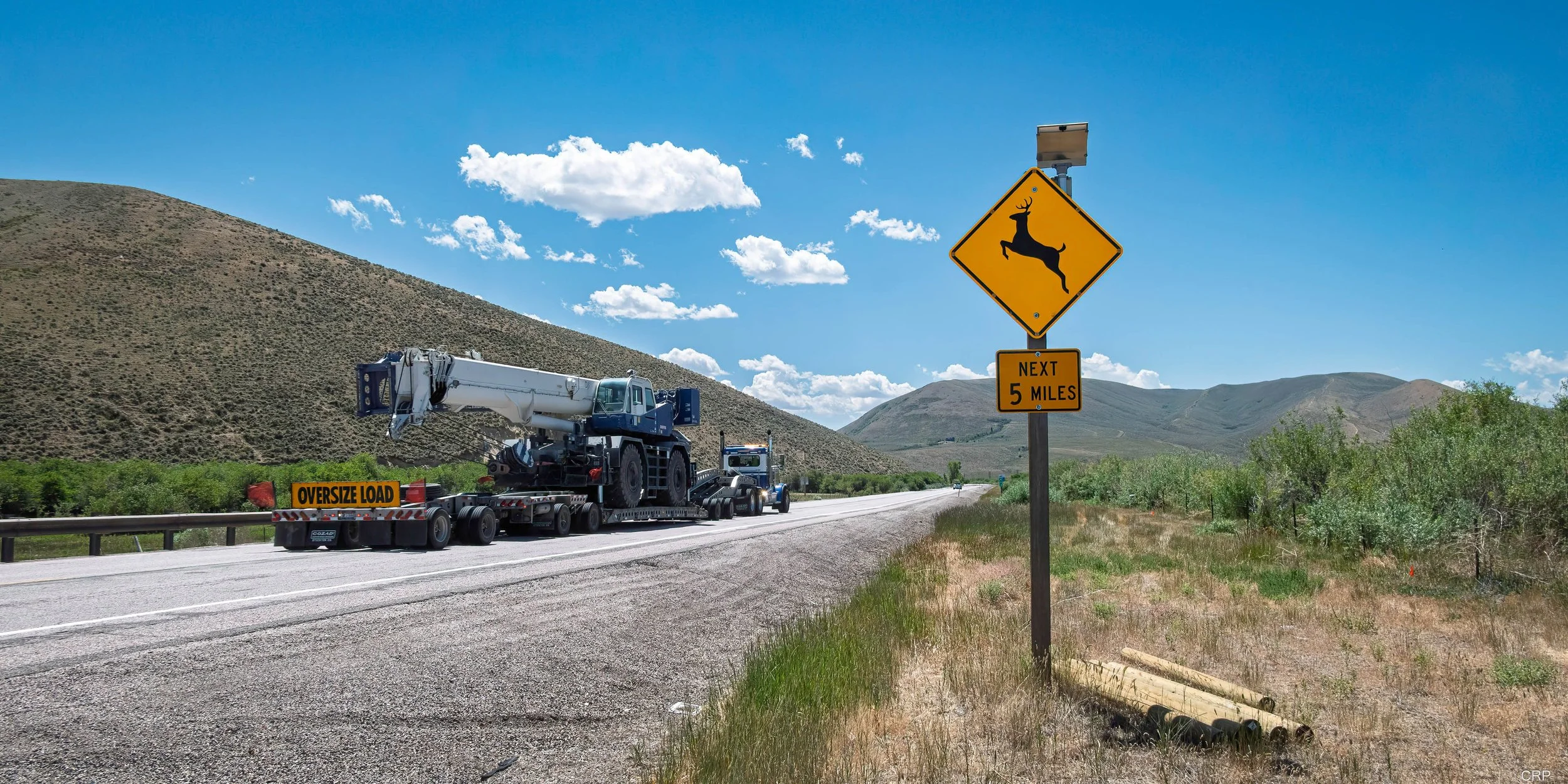
Chuck Peterson photo.
For years, a five-mile section of this asphalt ribbon near Montpelier, known as Rocky Point, has been identified by the Idaho Transportation Department (ITD) as a chronic hotspot for wildlife-vehicle collisions (WVC). In 2022, that finding was backed up by a U.S. Geological Survey report, Ungulate Migrations of the Western United States, Volume 2, that used GPS collars to document an important movement corridor for the Bear Lake Plateau mule deer herd. Upwards of 6,000-8,000 animals use the area to migrate up to 70 miles between summer and winter ranges in Idaho, Wyoming, and Utah.
To access vital seasonal habitats, the deer must cross US-30. An increasing number of elk have also taken up year-round residence nearby on the Bear River. ITD’s data shows an excess of 100 deer fall victim to motor vehicles near Rocky Point each year (a conservative number as actual WVCs far exceed those reported). Idaho Fish and Game considers this “additive” to natural mortality and could potentially lead to gradual population declines.
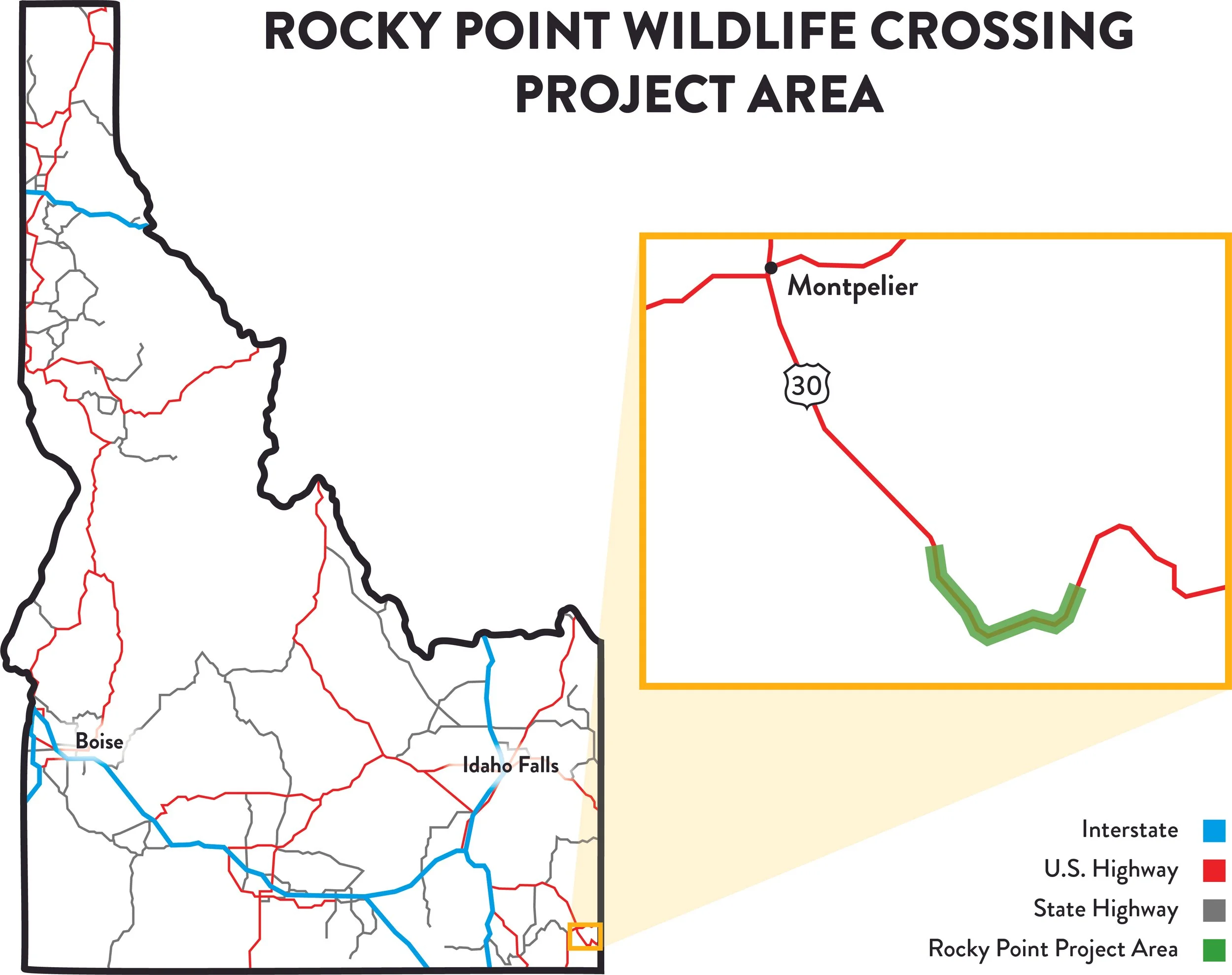
Map courtesy Julia Barton/Greater Yellowstone Coalition.
Across the country, more than 1,000,000 WVCs cause thousands of injuries and deaths, costing over $8 billion. A study of western states documented over 12,000 annual collisions with large wildlife in Idaho during a 12-year span (2010-2022). Annual costs of WVCs in Idaho average nearly $150 million.
In 2020, Congress established the Wildlife Crossings Pilot Program (WCPP) and dedicated $350 million over five years to address the national WVC epidemic. Nationwide funding rounds have seen five times as many requests as the program has capacity for. The WCPP renewed the interest of conservation organizations, sporting groups, and the general public to preserve important big game migratory corridors, as well as to protect people and wildlife.
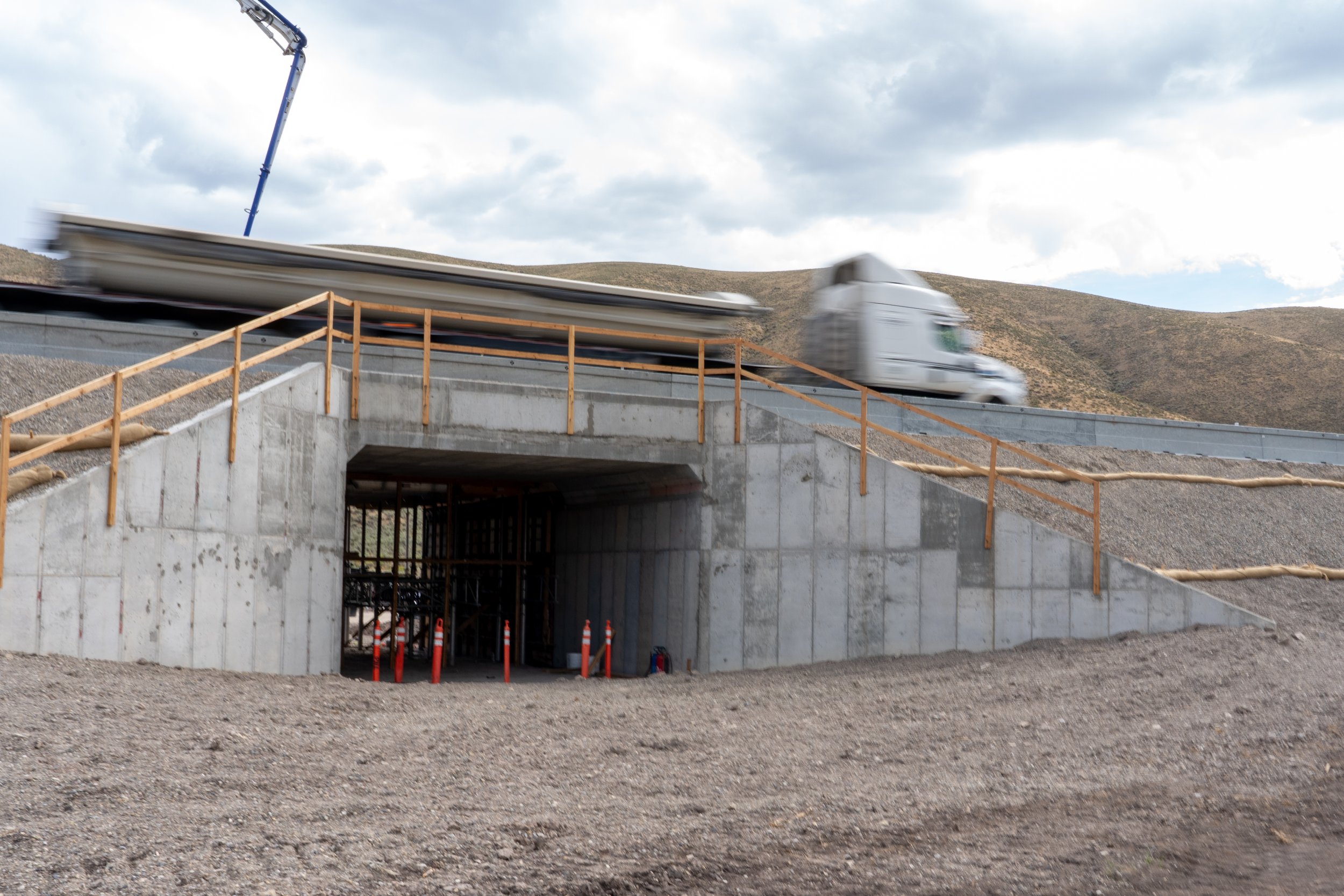
Julia Barton/Greater Yellowstone Coalition photo.
Early last year, thanks to persistence and a compelling, shovel-ready project, ITD managed to secure funding from the wildly successful program to give motorists and mule deer using the Rocky Point area help. The agency is now nearing completion of the Rocky Point Wildlife Crossing—a $14 million project with three wildlife underpasses and wing fencing along six miles of US-30. Cervidae Peak, a similar project on SH-21, east of Boise, has seen an 85-90% reduction in WVCs since it was completed in 2023.
A diverse group of stakeholders has supported the project for years, including local residents and law enforcement, adjacent ranchers, the Bear Lake County Commission, Idaho Department of Fish and Game, and conservation groups like Idaho Conservation League, Greater Yellowstone Coalition, and Teddy Roosevelt Conservation Partnership.
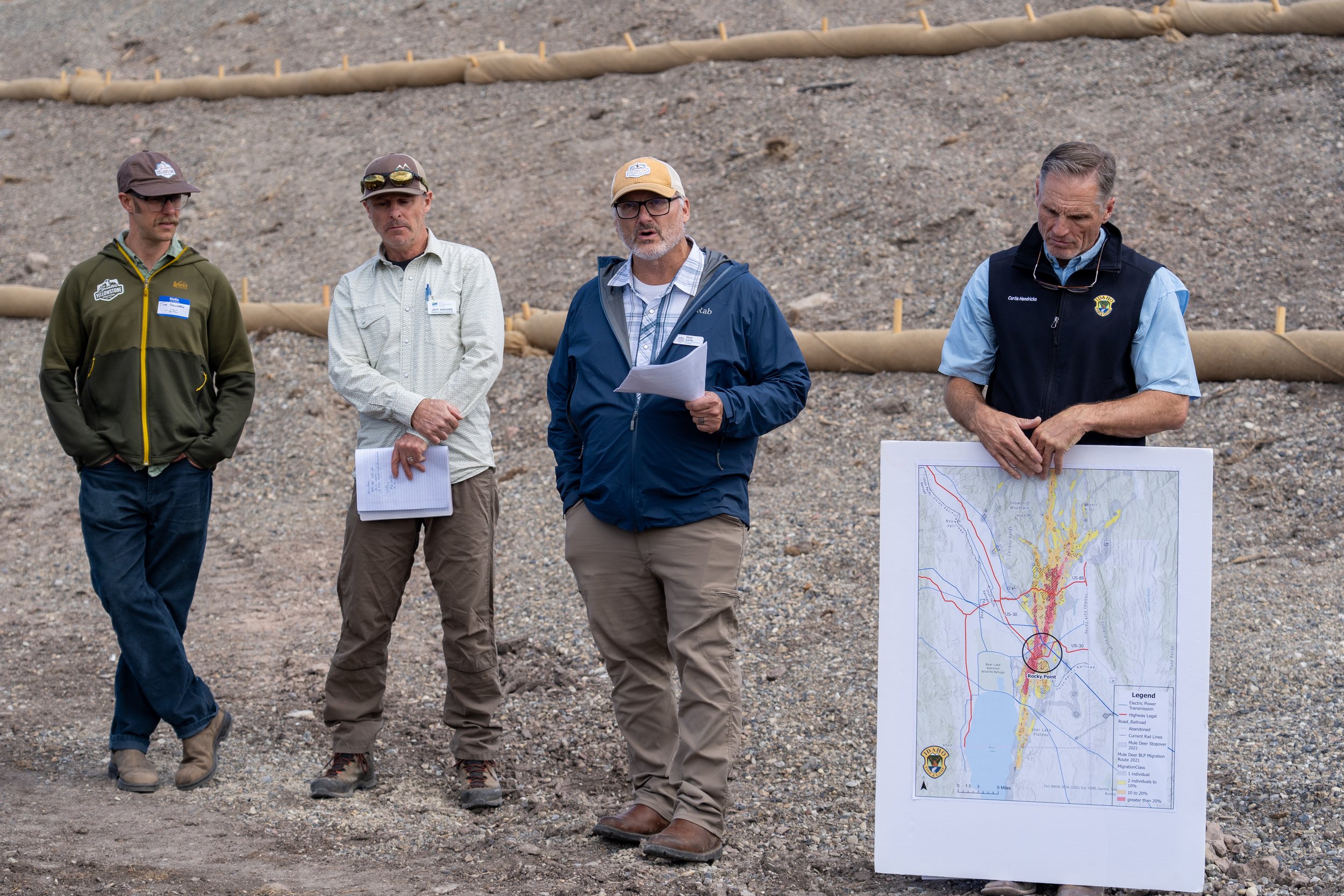
Julia Barton/Greater Yellowstone Coalition photo.
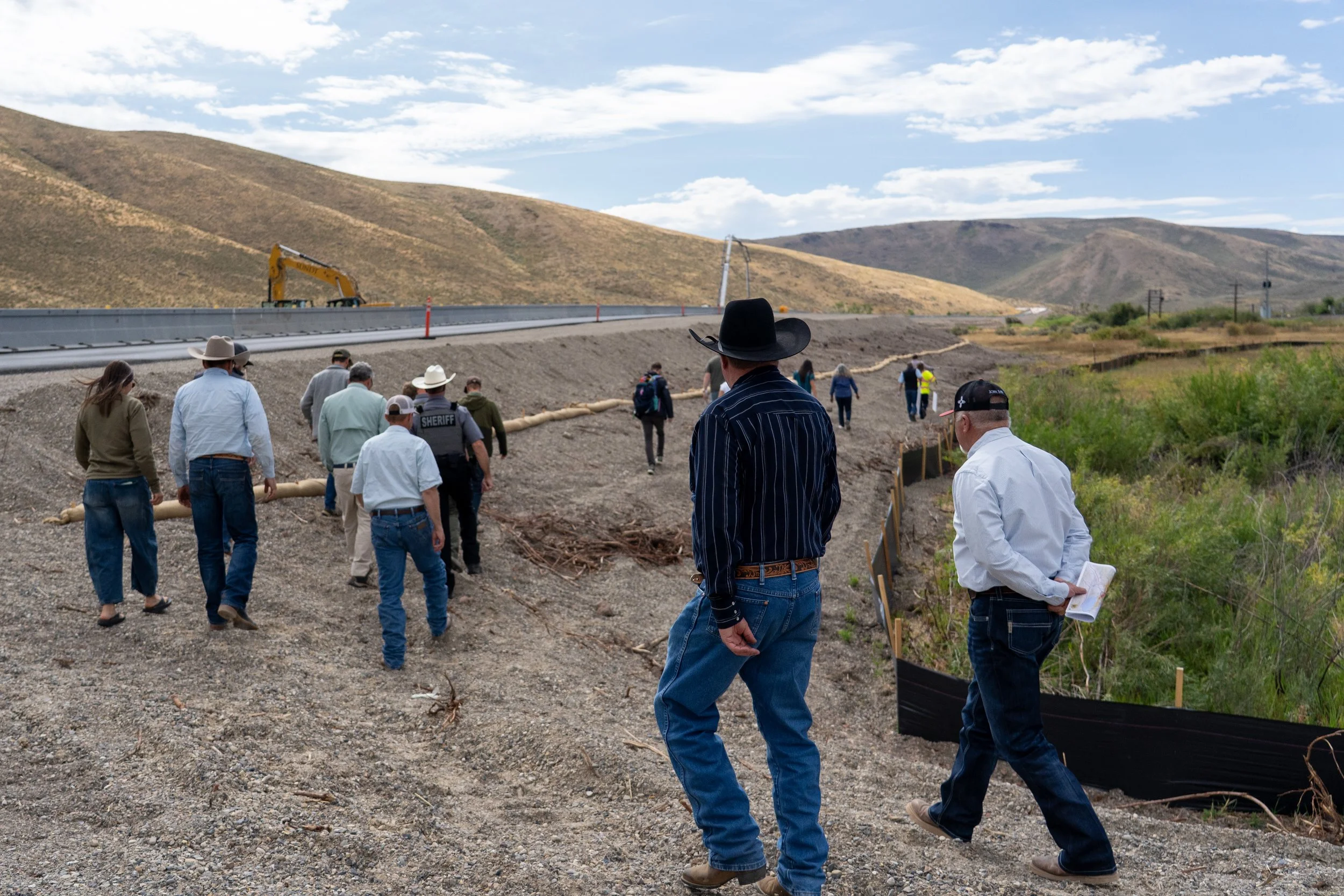
ICL was on hand last week, when the group used the travel schedule of Senator Mike Crapo’s Washington, D.C. staff as a catalyst to tour the bustling project site—still teaming with flaggers and throttled by temporary traffic lights.
The visit featured short presentations highlighting the safety and conservation benefits of Rocky Point. As the WCPP pilot program unfortunately sunsets next month, we discussed the urgent need to make it permanent and to increase its funding. Legislative proposals like the Wildlife Road Crossings Program Reauthorization Act (H.R 6078) are underway right now to do just that.
Bear Lake Commissioner Wynn Olsen spoke personally about what the project means to him. Decades ago, he often made late-night drives to Pegram, which also meant driving the dark highway home. On more than one occasion, the trip was interrupted by taillights and an emotional encounter with a motorist seeking help after hitting an animal.
Julia Barton/Greater Yellowstone Coalition photo.
With knowledge of agencies like ITD and IDFG, and stories like Commissioner Olsen’s, the group agreed that there are ways to leverage almost universal public support for wildlife crossings in Idaho to benefit our residents and visitors. We know how to ensure that our legendary big game herds can thrive in the face of the state’s rapid growth. Last year, a new resolution from Idaho’s legislature (SCR 124) helped deliver this message. Now, Congressional leadership from Idaho’s delegation will be critical to get current federal wildlife crossings funding initiatives over the hump.
Public safety and wildlife mitigation projects are significant investments. It’s encouraging that many economic analyses say crossings structures tend to pay for themselves in less than 10 years. Conversely, the costs of inaction are enormous.
Let’s celebrate the Rocky Point project! With the support of local communities where wildlife is part of daily life and recreational enjoyment, successful projects like Rocky Point and Cervidae Peak can sustain momentum and help get more of these initiatives over the finish line for Idaho.