
Quaggas are still in the Snake River - here’s what you need to know
Earlier this week, the Idaho State Department of Agriculture (ISDA) announced that quagga mussels were once again detected in the Mid-Snake River. This marks the fourth consecutive year quaggas have been detected in the Mid-Snake, starting with their initial discovery in September 2023. That discovery prompted the State to undertake what has become the most ambitious and complex invasive mussel eradication effort ever attempted in North America.
As we have said many times, this is a no-win situation. Quagga mussels may be tiny, but their impacts are enormous. If quaggas become established in the Mid-Snake River, there is little doubt they would significantly disrupt the aquatic ecosystem while also causing widespread economic damage by clogging irrigation systems, impairing hydropower facilities, and affecting other critical infrastructure. The financial cost of quagga mussels is estimated in the hundreds of millions of dollars in direct and indirect impacts, while the long-term ecological consequences could be equally profound. Quaggas were listed as one of the primary threats to the health of the Snake River in ICL’s recent State of the Snake report.
Unfortunately, the eradication effort itself carries significant environmental costs. The copper-based aquatic pesticide being used to eliminate quagga mussels does not selectively target mussels; it kills a broad range of aquatic organisms within the treated stretch of river. In other words, the State (and all of us who care about the Snake River) is confronting an extraordinarily difficult choice: allow a potentially devastating invasive species to establish itself, or attempt to eradicate it using a treatment that can itself cause substantial and potentially long-lasting ecological damage.
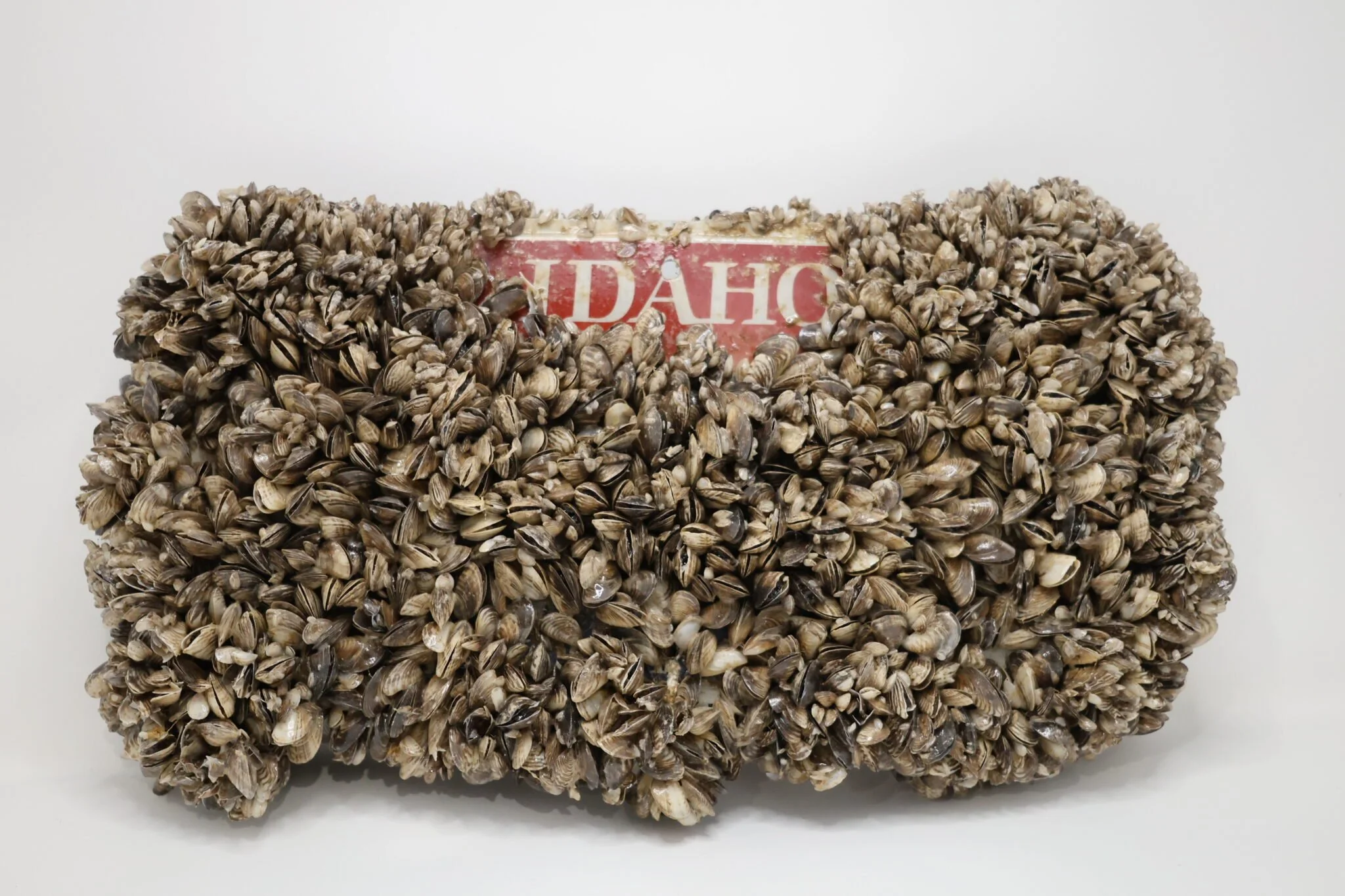
ISDA photo.
The latest detection
This summer, ISDA has detected a grand total of 8 veligers (the microscopic larvae of quagga mussels) through their regular monitoring in the Mid-Snake. The veligers were found in a smaller portion of the river than in years’ past—just in the reservoirs upstream of Shoshone Falls and Twin Falls. ISDA divers have also removed 7 adult quagga mussels that were found within the deep pool in Twin Falls Reservoir.
The next treatment plan
ISDA just released their draft treatment plan for this year, which will continue the State’s efforts to eradicate quaggas from the Snake River. This treatment, which will commence in late August, will be restricted to just the pools above Shoshone Falls and Twin Falls. A three step process will be used in the affected areas: 1) application of a fast-acting copper sulphate product (Earthtec QZ), 2) application of a longer lasting copper chelate product (Natrix, which has been used previously), and finally, 3) application of a granular algaecide (Cutrine Plus) to fissures in the underwater rock that may have been harboring mussels. As with prior treatments, monitoring will occur downstream on the Snake River to ensure that copper concentrations are dissipating as intended. ICL will be monitoring the treatment closely, though no one will know if the treatment was successful until next summer at the earliest.
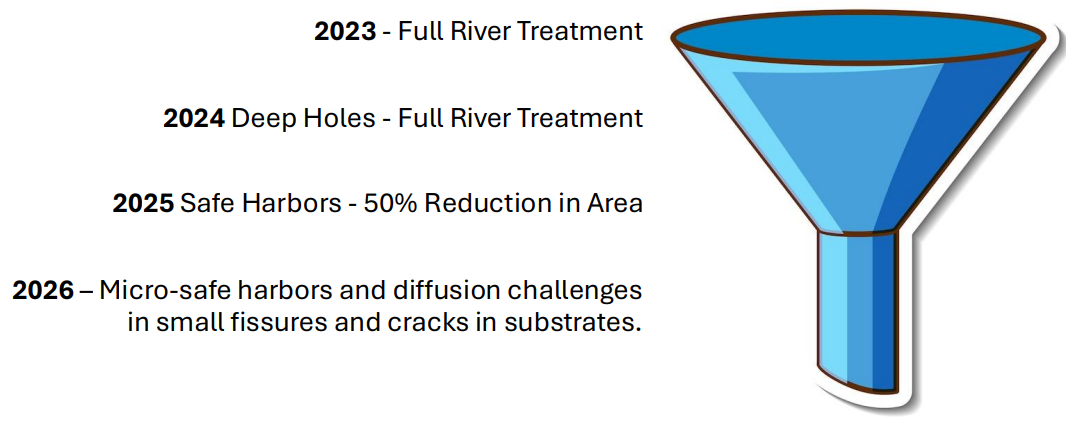
Schematic showing how treatment efforts have progressed since 2023 (ISDA Draft 2026 Treatment Plan)
Prevention is the best defense
Whether or not this ambitious eradication effort succeeds, one thing is clear: prevention is critical. We cannot afford to let quaggas spread to other waterways in our state.That means Idaho needs stronger measures, such as:
Mandatory boat check and decontamination stations at all popular boat ramps statewide
Consideration of more extensive temporary boating restrictions in the Mid-Snake
Regular evaluation of prevention programs by ISDA, the Governor, and the Legislature
As the old saying goes: an ounce of prevention is worth a pound of cure. In the case of quaggas, prevention may be worth millions.For more information and ongoing updates regarding quagga mussels in the Snake River, visit ISDA’s official site at https://invasivespecies.idaho.gov/quagga-mussels.