
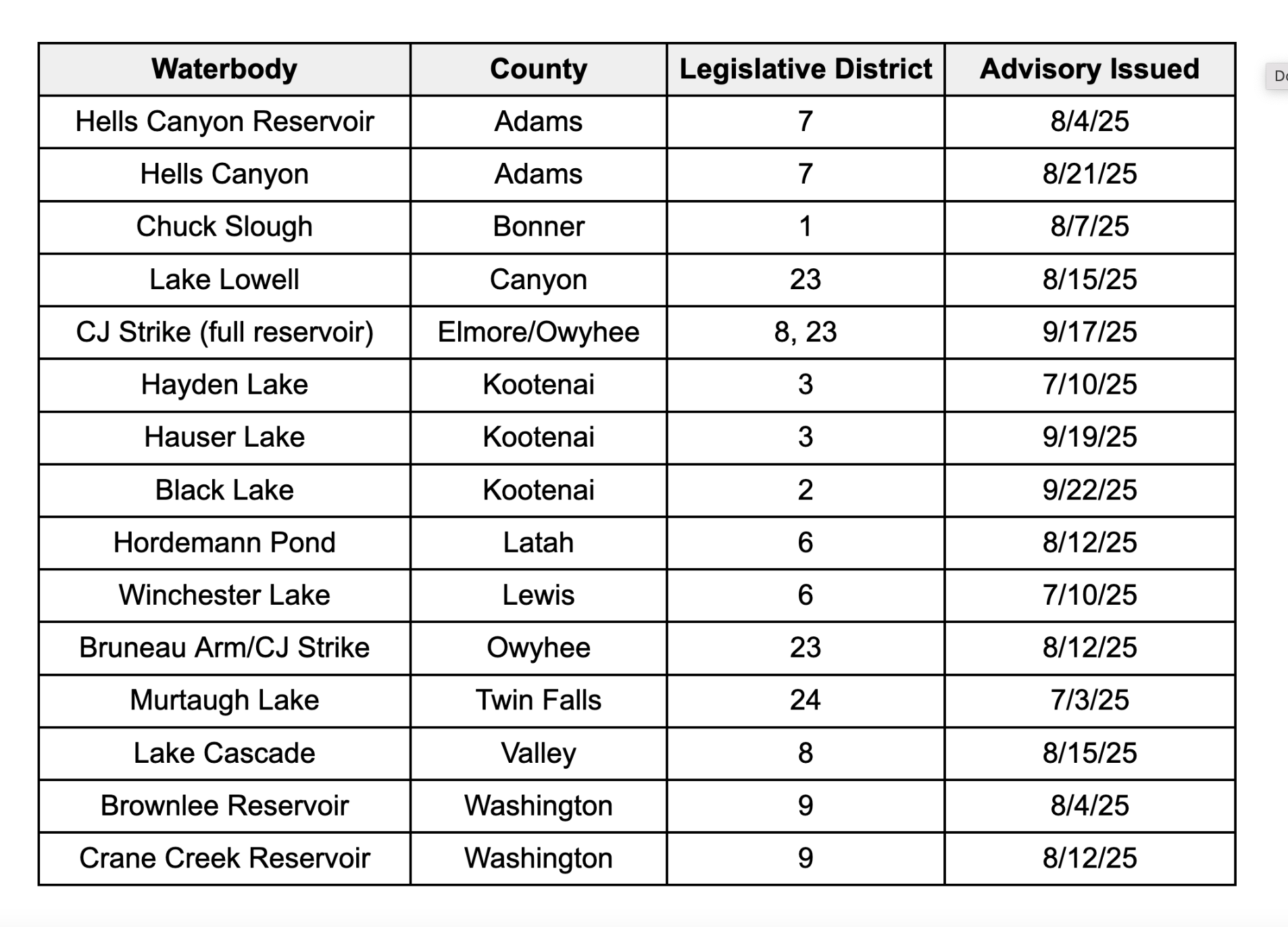
Now that temperatures have cooled down, the threat of toxic algae has abated for Idaho’s water bodies and all health advisories have been lifted. However, this past summer, there were a total of fifteen toxic algae outbreaks across the state. This is an increase from 2024 when 13 water bodies had 14 health advisories. To address the growing problem of toxic algae in 2025, ICL alerted each Idaho State Legislator whose district was impacted by each toxic algae outbreak that broke out this year. Legislators in District 23 (Melba/Kuna/South Nampa) received the highest number of notifications (three) out of the 35 districts.
Looking ahead
In Idaho, the Department of Health & Welfare (DHW), Department of Environmental Quality (DEQ), and the public health districts work together to identify, monitor and respond to what is referred to by several different names; toxic algae, cyanobacterial harmful algae blooms or HABs. While most algae is safe to humans, some types can produce toxins which are poisonous to people and animals. Factors that contribute to toxins are warmer, slow-moving water, high concentrations of fertilizer that contain nitrogen and phosphorus from farms or landscaping, and human and animal waste. According to the Center for Disease Control (CDC), toxic algae impacts the ecosystem by using up much of the oxygen in the water and then releasing harmful gases. These released gases can cause sickness in animals or humans and in some cases, death.
ICL’s intent is to work with legislators to appropriate dedicated funding to proactively test water for toxic algae in the interest of public safety, ICL recommends modeling an Idaho program after Utah’s proactive monitoring program. The Utah DEQ monitors water bodies to ensure the public avoids harmful water via public health advisories while taking preventative measures which lower costs to the public who receive advance warnings of unsafe drinking water. Utah’s program cost is approximately $200,000. It includes weekly sampling and posting warning signs if toxic algae is present, rather than primarily relying on the public to alert DEQ to possible outbreaks.
The bottom line is that the state could be doing more to detect this algae to protect its citizens, and it would not come at a huge cost in the scheme of things. Regular testing of water bodies is a great first step so we are getting ahead of any potential outbreaksICL will continue to talk with legislators and the Governor’s office about appropriating a small amount of funds to address this important issue that will continue to have a significant impact on Idahoans’ lives.